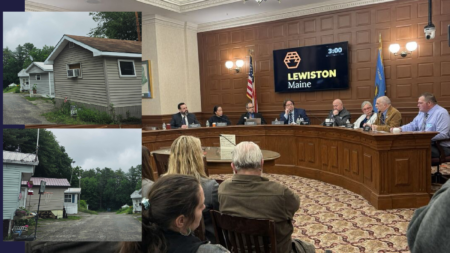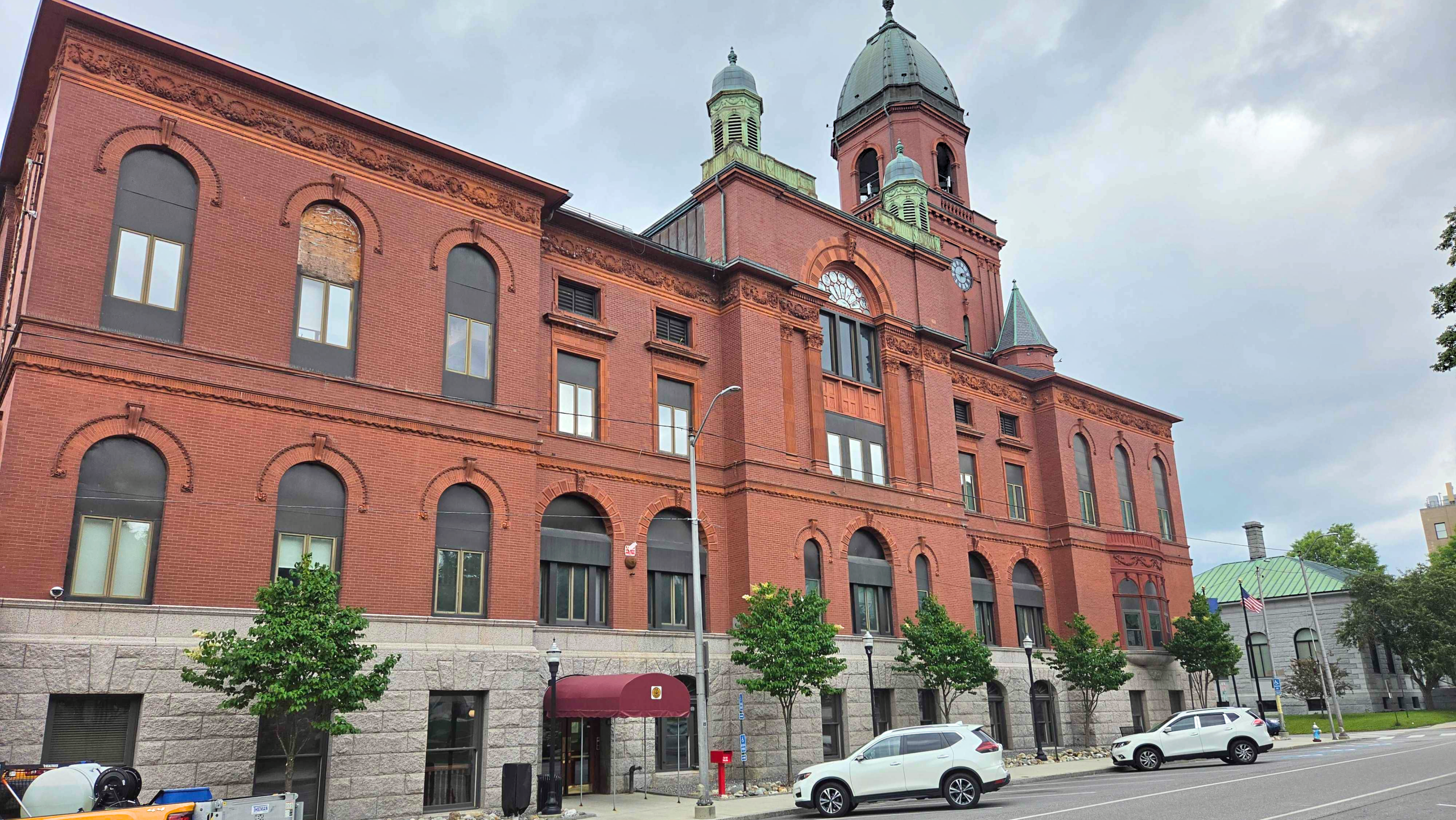
LEWISTON, Maine — After nearly two hours of debate and emotional public testimony, the Lewiston City Council voted unanimously Tuesday night to approve a $200,000 supplemental appropriation to fund additional police overtime in response to an unprecedented spike in shootings and violent crime.
The 7-0 vote came after city officials painted a sobering picture of public safety in Maine’s second-largest city, where 20 shooting incidents have occurred during the first seven months of 2026, a number City Administrator Brian Kaenrath described as unacceptable for a community of just 37,000 residents.
“We’ve had 20 shootings in our city this year,” Kaenrath told councilors. “The people of this city want action. They want us to address the violence happening in our city repeatedly.”
The funding will be transferred from the city’s Salary Reserve account and used exclusively for foot patrols, bicycle patrols, and staffing a mobile police resource unit in neighborhoods experiencing the highest levels of violent crime.
Officials stressed repeatedly that the proposal represents only the first phase of a broader public safety strategy known as Community Engagement and Accountability (CEA), which will eventually include youth programming, recreation, prevention initiatives, and proposed changes to Maine’s juvenile justice system.
“This is the beginning, not the end,” Kaenrath said. “What we’re addressing tonight is the emergency.”
Police Chief: Same Juvenile Offenders Keep Returning to the Streets
Lewiston Police Chief Carly Conley said the department’s analysis shows that many of this year’s shootings involve repeat juvenile offenders who cycle repeatedly through the criminal justice system.
“The reality is what we’re seeing is these same individuals repeating the same behavior and coming back into the community,” Conley said.
According to Conley, Lewiston police have solved roughly 69 percent of this year’s shootings, more than double the national clearance rate, but officers continue encountering many of the same juveniles after they’re released back into the community.
“The police are doing their work,” Kaenrath added. “They’re making arrests, they’re solving cases. When it gets to the court system, we see these kids back out on the street… and the cycle repeats itself.”
The city plans to work with legislators before the next session to seek reforms allowing judges and prosecutors greater authority to detain repeat violent juvenile offenders while expanding treatment and competency restoration programs.
Department Operating 12 Officers Short
Conley said the overtime request has become necessary because the department is currently down 12 officers, leaving patrol officers almost entirely consumed by answering routine calls.
“Our officers are just handling the regular calls for service,” she said. “That’s why we need the overtime in order to really hyper-focus on this situation.”
The additional funding will allow officers to return to neighborhood foot patrols and bicycle patrols while staffing a mobile police unit intended to function much like the neighborhood substations Lewiston operated years ago.
Mayor Carl Sheline called the proposal the fastest way to increase police visibility.
“We need to have a different August than we had in July,” Sheline said.
Martel Proposes Second Police Drone
Before approving the overtime request, Councilor Bret Martel introduced an amendment seeking an additional $55,000 to purchase a second automated first-responder drone, arguing the technology would multiply the effectiveness of an already understaffed police department.
The proposal would have funded the drone through the city’s fund balance.
Conley explained that the department is already scheduled to receive one self-deploying drone within several weeks after previous approval by the Finance Committee.
Unlike traditional drones, the new system automatically launches after certain emergency calls are dispatched, allowing officers to observe active crime scenes before police arrive.
“If we get a call for a shooting on Bartlett and Walnut, that drone responds immediately,” Conley explained.
She said the drone could also patrol designated neighborhoods during periods of increased criminal activity and provide officers with real-time intelligence before they arrive.
Martel argued that a second drone would dramatically expand the department’s capabilities.
“This city is in the middle of a legitimate public safety crisis,” Martel said. “People are getting shot more than once a week. It is not if—it’s when someone gets hit with one of these bullets.”
Calling the drone a “force multiplier,” Martel said the $55,000 investment represented a relatively small expense compared to other city projects.
“We just approved $30,000 for plants,” he said. “This is something that’s going to proactively make our community safer.”
Amendment Defeated 5-2
Despite support from Councilors Susan Longchamps and Martel, the amendment failed 5-2.
Several councilors questioned whether the city should purchase a second drone before the first one arrives and officers gain operational experience using it.
Others objected to the amendment being introduced during the meeting rather than through the normal agenda process.
Finance Director Tracy Roy also cautioned against using additional money from the city’s fund balance, warning that Lewiston has already reduced its reserves during this year’s budget process.
She said further withdrawals could negatively affect the city’s upcoming bond rating review and potentially increase future borrowing costs.
Mayor Sheline said the city should first evaluate how the initial drone integrates into police operations before considering another purchase.
Public Split Between Immediate Enforcement and Long-Term Prevention
Public testimony reflected broad agreement that Lewiston faces a serious public safety crisis, but sharp disagreement over how best to respond.
Several downtown business leaders supported the overtime funding, saying increased police visibility has already improved conditions around Dufresne Plaza and the Oak Street parking garage.
Danielle Snow, chair of the Downtown Lewiston Association, said businesses have seen measurable improvements after increased patrols reduced disorder in key downtown areas.
“Safety and the perception of safety is a business issue,” Snow said.
Community Credit Union President and CEO Jen Hogan also supported the proposal while encouraging city leaders to pursue broader partnerships addressing mental health, substance abuse, housing instability, youth engagement, and neighborhood safety.
“This is not the responsibility of any one organization,” Hogan said. “It will take all of us.”
Former Lewiston Police Chief and Mayor Larry Gilbert strongly endorsed the overtime request, encouraging officers to return to bicycle patrols and spend more time knocking on doors and building relationships with residents.
“Who knows better what’s happening in a neighborhood than the people who live there?” Gilbert asked.
Critics Call for Greater Investment in Youth
Several speakers urged the council not to rely primarily on increased policing.
Community organizer Melissa Dunn opposed the proposal, arguing that the city should invest directly in prevention rather than expanding enforcement.
Other residents questioned whether the initiative truly reflected “community engagement,” saying the city should instead prioritize recreation, mentoring, athletic programs, mental health services, employment opportunities, and intervention programs for at-risk youth.
Amran Osman told councilors that enforcement alone cannot solve the problem.
“A young person who is arrested repeatedly is more often a young person who needs intervention and opportunities that reach them before the justice system did,” Osman said.
Another resident, Elizabeth Eames, read remarks from community leader Ifrah Said, who argued that Lewiston suffers less from a shortage of organizations than from a lack of coordination among schools, law enforcement, nonprofits, probation officers, and mental health providers.
“No child should fail because the adults responsible for helping them fail to work together,” the statement read.
City Says More Changes Are Coming
Following the public hearing, Kaenrath acknowledged many of the concerns raised by residents, emphasizing that Tuesday night’s vote addresses only the city’s most immediate challenge.
“This is not just an enforcement piece,” he said. “Programming and prevention are absolutely critical.”
Chief Conley echoed those comments, saying the mobile police unit is intended to become a community resource rather than simply another enforcement tool.
Councilors ultimately agreed the immediate priority is restoring a visible police presence while broader solutions are developed.
The council then voted 7-0 to approve the $200,000 overtime appropriation, officially launching the first phase of Lewiston’s Community Engagement and Accountability initiative as city leaders continue searching for long-term answers to the surge in juvenile gun violence.