

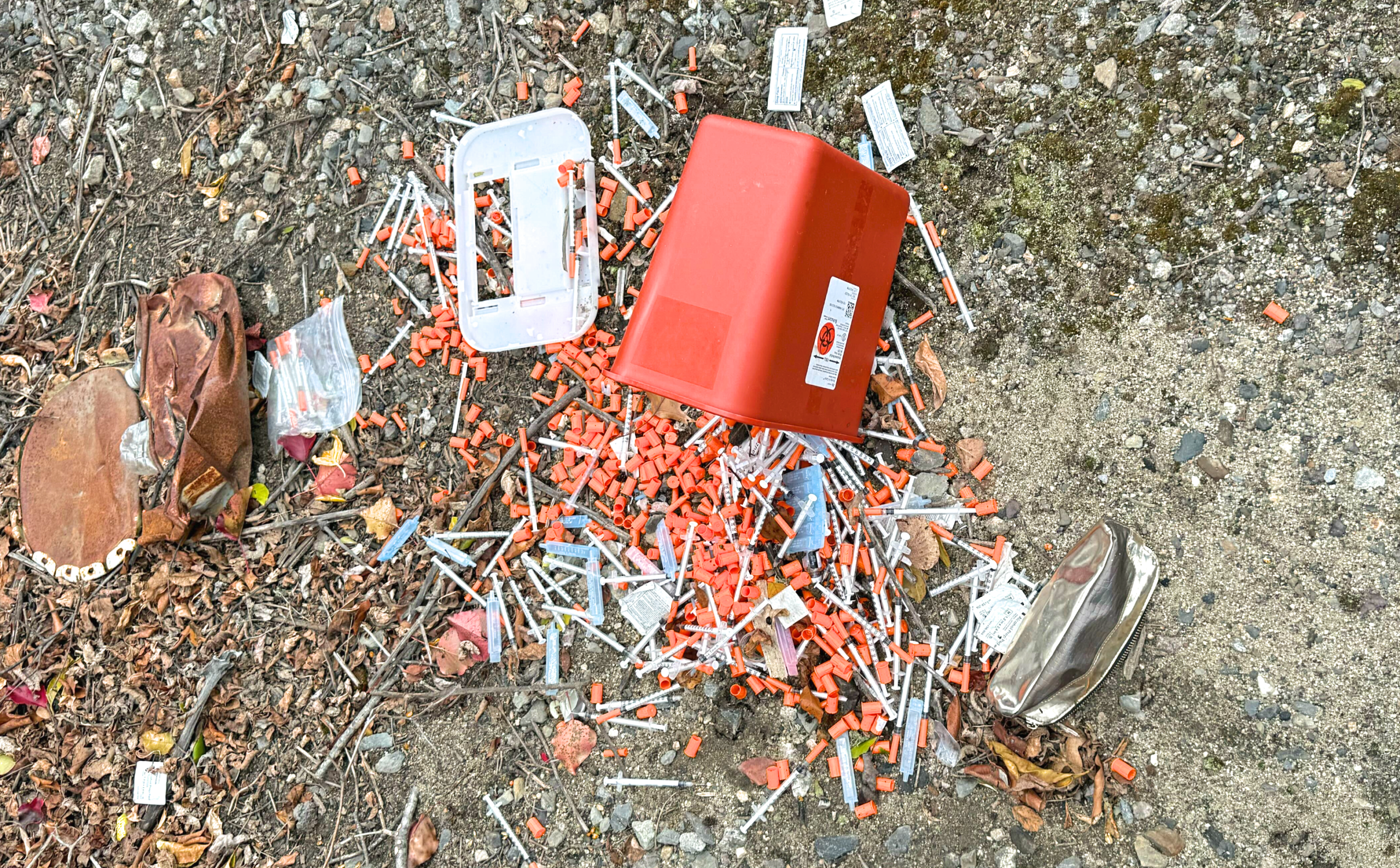
From 2019 to 2025, Maine spent more than $22 million in state and federal tax dollars on syringe services programs — that is, “clinics” where intravenous drug users can get needles for free, 100 at a time.
What did we get for all that cash?
The distribution of 17.2 million free needles — 2.3 million of which remain uncollected — and the largest HIV/AIDS and hepatitis C outbreak in generations. On top of that, Maine saw drug addiction and drug-related crime soar. Of course, the progressive district attorneys refuse to prosecute criminals, so cops stop making futile arrests, and then the DAs crow that crime is down when the only thing that’s actually down is crime fighting. Ask any cop in Maine and he will tell you the same thing: the majority of crime flows directly from narcotics trafficking and narcotics addiction.
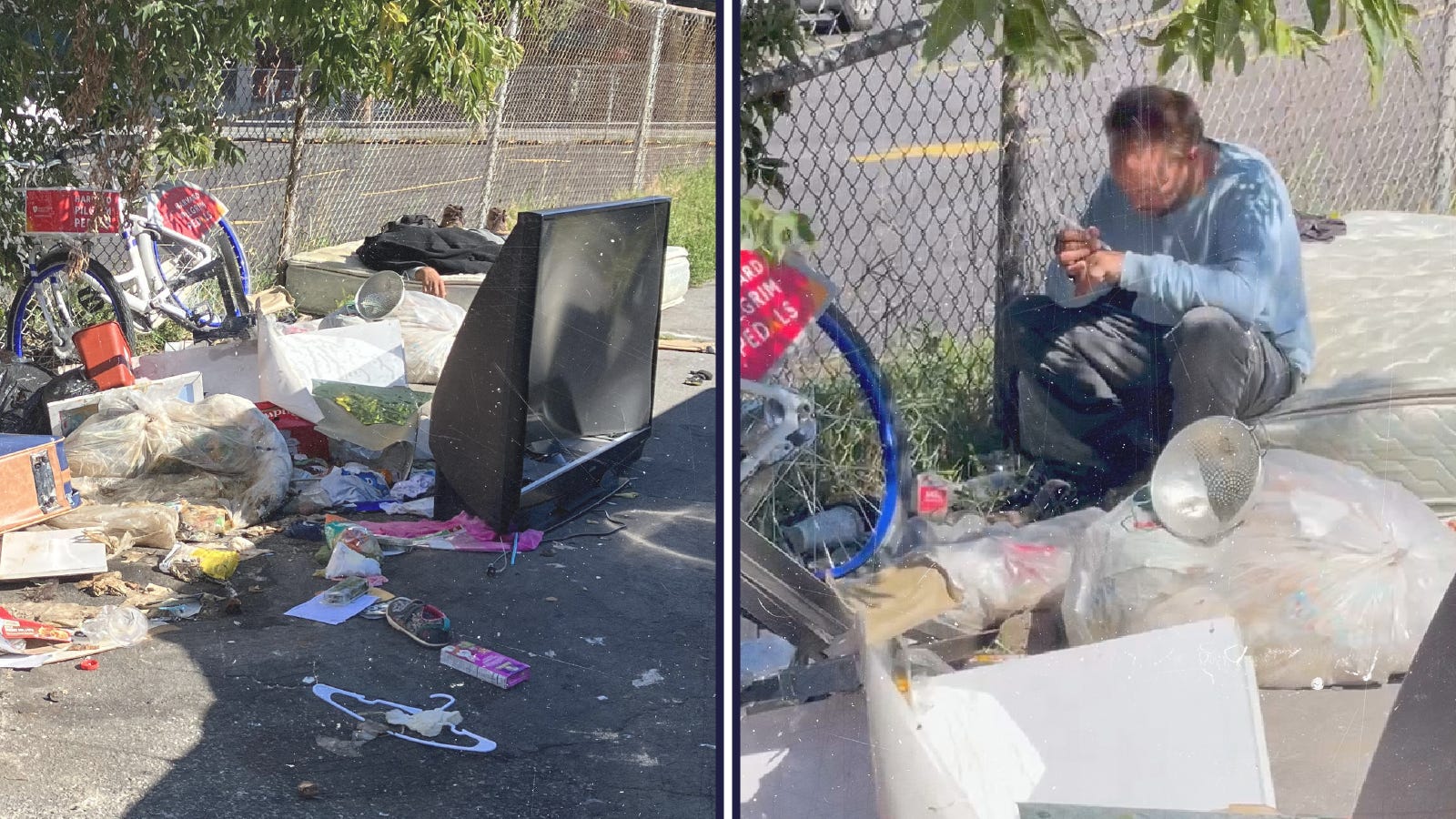
In 2023, there were 8,373 drug addicts — sorry, individuals suffering from substance use disorder — picking up free needles at the taxpayer-funded clinics. The next year, that number almost doubled to 15,949, according to the state’s own reports. If we’re measuring the success of the needle program by the number of needles handed out, then it’s going smashingly. The trouble is that the program’s ostensible purpose was to limit the spread of bloodborne illnesses. By that measure, it’s failed beyond even the most cynical predictions.
In case you missed the news, Maine is currently experiencing the worst outbreak of HIV in the state’s history. All of it is drug-related, all connected directly to a taxpayer-funded needle giveaway in Penobscot County. Confirmed cases have now risen to 45. The original cluster of 24 cases flagged last year stemmed entirely from intravenous drug users who were patrons of the same NGO syringe program. The Department of Health and Human Services (DHHS) reports that 91 percent of the currently infected patients injected drugs within the last year. Of the 45 patients, 40 have a hepatitis co-infection — also the result of fentanyl injections.
In other words: Maine’s worst-ever HIV and hepatitis outbreak happened exactly as progressive Democrats dumped millions of dollars into testing the proposition that giving away free needles would limit the spread of diseases like HIV and hepatitis.
It’s safe to say the results of the experiment are in. The progressive “harm reduction” policies haven’t just failed to reduce harm. They’ve actually caused more harm. This is a catastrophic failure of the public health policies championed by Gov. Janet Mills, her policy guru Hannah Pingree, and all of the “harm reduction” cultists at DHHS and Maine CDC.
To begin with, Mills suspended the 1-to-1 needle exchange requirement to save us all from the China Virus. How’d that work out? Can we get an accounting of how many lives were saved because drug users could get 100-packs of syringes without turning in needles, rather than under the long-standing requirement that one needle returned earned you one clean needle? I have a feeling the number of lives saved as a result of this imbecilic policy is about the same as the number of words Mills will utter admitting the abject failure of her policies. That is, zero.
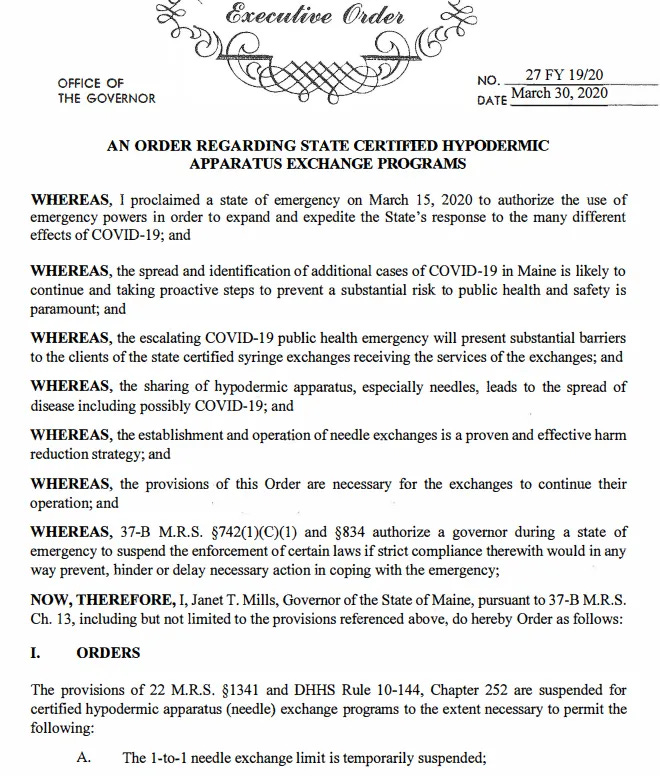
Compounding the unscientific lurch toward harm reduction policies, Democratic lawmakers then permanently loosened the syringe service rules and poured state cash into the NGO complex that shovels needles into the street: Down East AIDS Network / Health Equity Alliance, Maine Access Points, Wabanaki Public Health and Wellness, Church of Safe Injection, Tri-County Mental Health Services, Spurwink, and the rest.
The legislative paper trail is not subtle — and legislative Republicans have some of the infected blood on their hands, too. The 128th Legislature enacted Public Law 2017, chapter 464 (LD 1707), putting $75,000 behind hypodermic exchange programs. That effort required some Republicans to join Democrats in overriding Gov. Paul LePage’s veto. (You can see who voted for the “Act To Reduce the Cost of Care Resulting from Blood-borne Infectious Diseases” here.) But that unwise policy move was peanuts compared to the torrent of cash Mills and her Democratic allies would then pour into needle programs.
Post-2018, the Mills administration stacked on roughly $2 million from the Fund for a Healthy Maine to expand needle distribution sites, then $800,000 and later $1 million from the Opioid Use Disorder Prevention and Treatment Fund, then another $1.92 million for 2023–2025 — on top of the original $75,000 annual baseline and late-2024 opioid-settlement awards of $75,000 per site, per year. In 2021, Democrats went further and decriminalized possession of syringes with residual drugs. In 2022, DHHS locked in the 1-to-100 rule Mills had created by executive fiat: bring nothing, leave with up to 100 free needles. In 2025, with the Bangor-area HIV outbreak already raging, the Legislature passed another law (LD 1078) to expand mobile and rotating exchange sites.
Before the policy free-for-all, Maine’s exchanges typically collected as many syringes as they handed out — or more. In the 2019 reporting year, Maine’s syringe service programs distributed about 880,000 syringes and collected about 949,000. Back-calculate from that year’s 15 percent jump and you get roughly 764,000 distributed in 2018, with collections again exceeding distributions. In other words, the 1-to-1 policy was giving hard drug users clean needles without littering the streets with infectious hazards. Then Mills and the Legislature blew the doors off. Official Maine CDC reports to the Legislature show the explosion:
- 2020: 1.67 million distributed, 1.31 million collected
- 2021: 2.70 million distributed, 2.02 million collected
- 2022: 2.37 million distributed, 2.43 million collected
- 2023: 3.68 million distributed, 3.16 million collected
- 2024: 3.19 million distributed, 2.49 million collected
- 2025: 2.70 million distributed, 2.48 million collected
Add it up for the Mills era (2019–2025 reporting years): about 17.2 million syringes handed out and about 14.8 million collected. Roughly 2.3 million never came back. That is a standing inventory of dirty needles in parks, riverwalks, playgrounds, encampments, Bangor’s hidden drug enclaves, and storm drains — paid for by the working families who can no longer let their kids run barefoot.
Sanford’s city manager reported roughly 14,700 used syringes pulled from a single encampment next to a Maine Access Points site. Portland’s two programs alone were nearly 300,000 syringes underwater in a single year. In Bangor, Health Equity Alliance — the dominant taxpayer-backed exchange — distributed about 659,000 syringes in the 2023 reporting year and about 589,000 in 2024 before collapsing amid financial mismanagement.
The human cost is not theoretical. A three-year-old was stuck by a discarded hypodermic on the Brewer Riverwalk this week — a story first reported by The Maine Wire’s Joe Sokol and subsequently ripped off shamelessly by the Bangor newspaper. Former Lewiston City Councilor Ryn Soule was stuck in April and hospital-treated while the city still debated more “harm reduction” money. Dogs get the same treatment on the same lawns and trails. Every public space becomes a minefield of taxpayer-funded sharps potentially laced with fentanyl residue and blood borne disease. And the one theoretical public good these programs were supposed to supply, i.e. protecting intravenous drug users from spreading HIV, backfired in the worst way imaginable.
The only good thing you can say about Maine’s opioid policies is that overdose fatalities have decreased slightly statewide from the record high of 606 deaths in 2023. But that reduction in deaths is attributable to two things. First, the same people funding free needle carts in every city also handed pharmaceutical companies a ton of cash to distribute Narcan, the overdose reversal drug, for free all over the state. The people living in tents on Maine’s city streets, when asked what kind of services they get from the city, have told us that a few times a month someone will come by and toss them a few Narcan doses. One of those men admitted to having been “Narcan’d” more than a dozen times over the last year.
The second factor in Maine’s slight fatality reduction, probably the largest factor, is that Dominican drug trafficking organizations like the Trinitarios started pushing meth and less potent blends of fentanyl. The Dominican drug traffickers are savvy businessmen, and they realized they were killing their clients too fast. An addict who fatally overdoses within six months is worth less over the long-term than an addict who survives at least a few years. That’s the ruthless logic of the international drug trafficking organizations that have been exploiting Maine while liberals talk about “restorative justice” and abolishing the police. Opioid deaths are down, slightly, but fentanyl addiction and the crime that spirals outward from it is raging like wildfire. And the policy designed to mitigate the spread of diseases related to intravenuous drug use, ie needle exchange programs, have incontestably failed.
Hannah Pingree has not had much to say about any of this in public. Last month, Mills went to the epicenter of rising opioid deaths and HIV cases to claim victory at the “opioid response summit.” Pingree’s only comment at the summit was that Maine needs to do more, but we’re left to wonder whether she means more of the failed policy. She spent six-plus years as Mills’ director of the Governor’s Office of Policy Innovation and the Future — the shop that co-owned the state’s opioid and “innovation” agenda — before leaving the administration in May 2025. Given that résumé, it’s reasonable to expect that a Governor Pingree would mean more “harm reduction” — that is, more needles, more NGO contracts, more mobile vans, and higher costs for the working people who now walk their kids past biohazards in what used to be ordinary public parks. Like most everything undermining the quality of life in Maine, it was a choice. A new class of political leaders could easily make a different choice. They could choose not fund the rot infecting our cities and instead fund effective law enforcement.


Remind me again, why do we have a bottle bill…
It beginning to look like the opioid settlement fund is all legal by democrats standards of permitting illegal drug use while funneling money back to them selves in the form of kick backs from the needle pushers.
How else can you explain this stupidity?
Or are they (politicians) buying votes with free needles?
They should be helping addicts to stop using drugs not allowing it.
I am happy to see comments working again. My hope is that the MW can keep comments operational and avoid these long periods of outages.
Probably I’m not the only one witnessing the daily destruction of western civilization and questioning if it’s me going mad. Seeing brethren and sistren expressing similar observations and opinions reminds me it’s not just me.
You deserve the consequences of who you vote for.
If they insist on giving out needles then we should insist on one for one exchanges. If the HIV/Hepatitis infections have increased where’s the justification for the needles. There needs to be more structure around these things.
It’s difficult to be sympathetic to this population at the expense of the innocent’s.
To say that needle exchanges cause the spread of HIV is simply false. Without access to clean needles the cases would be much higher.
About 50 years ago, we passed the bottle bill because of concerns about mere litter to give an incentive for people to return their cans and bottles rather than tossing them on the lawn.
That was me litter, these needles are more dangerous than guns, way more dangerous, and we wouldn’t tolerate assorted firearms true throughout our parks. Would we?
The only incentive for the druggie not to toss the needle somewhere is the fact that they’re hard to replace. The one to one exchange is merely a clean one for a dirty one handing out packs for 100 is insane….
And as to the false claims that the free needles didn’t increase HIV and hepatitis, well then what did increase it — the Martians or the Unicorns?!?
i’ll tell you one thing, if we were seriously reduce the number of needles available, it would reduce the spread of both HIV/hepatitis IV drug use. If, for example, any person found with an eight with IV needle was summarily shot by a police officer, it would quickly eliminate people with needles because they would either be dead or scared sober. And this is exactly how China eliminated its opium problem, something that people who favor the Chinese approach to things might want to remember…
A one-to-one exchange might possibly be beneficial, I’m willing to keep an open mind about that. But handing out packs of 100 without any being turned in is simply asinine. What possible incentive with the druggies have to turn their old needles in???
And what would we be doing if people were leaving loaded hand guns around in the bushes and shrubbery? 50 years ago, people caught with IV needles on them wound up doing time in Thomaston. The prison in Thomaston is now gone, as is the Maine of my youth….
Very poorly written opinion piece disguised as an article. No neutrality and full of claims to rile up readers who aren’t educated enough to realize. Lots of “facts” stated that were contradicting at the end of this opinion piece, likely knowing that readers wouldn’t read this whole piece and see the lies written as bait.
This is one of those “duh” moments. When needle-exchange programs were first proposed several years ago, I knew that was a disaster. Enabling continued drug use enables continued drug use; it does not phase out drug use. This is not rocket science. How about we re-engage our brains with a hefty dose of common sense?
Build it, and they will come.
Give it away,and they will grab as many as they can carry and sell it to the other junkies.
kaa-poww…..