

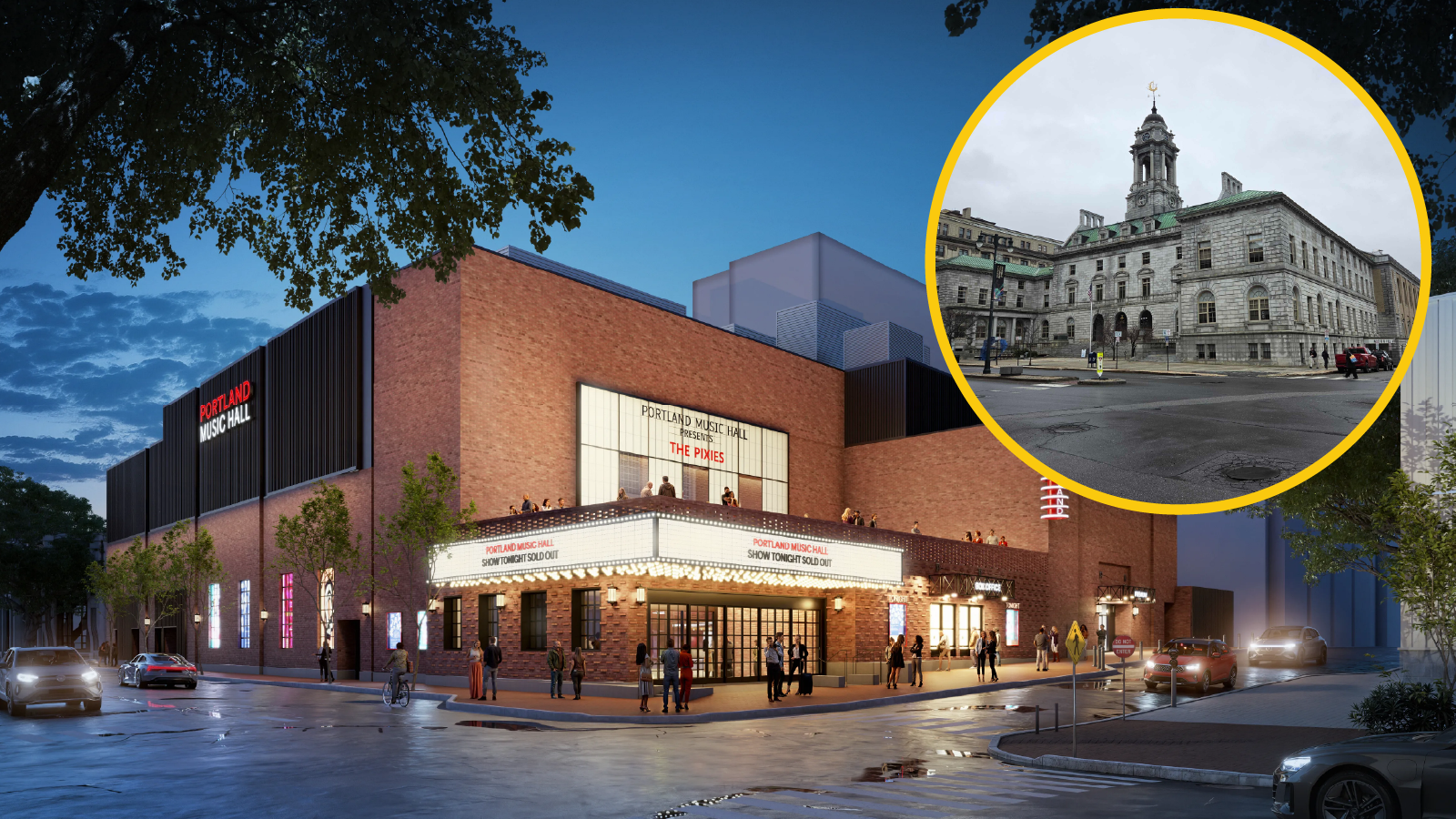
PORTLAND, Maine – After more than a year of planning, controversy, and mounting public opposition, the Portland City Council voted Monday night to expand the required buffer between large music venues, a decision that appears likely to halt the proposed 3,300-seat Portland Music Hall project and could set the stage for legal challenges.
The marathon meeting stretched late into the evening and included roughly three hours of public comment before councilors approved a 750-foot buffer between large entertainment venues by a narrow 5-4 vote. City staff previously warned that a buffer of that size would effectively kill the proposed venue, even though the project had complied with existing zoning regulations.
Mayor Mark Dion, who voted against the buffer expansion, framed the decision as one with long-term consequences for Portland’s downtown economy.
“Congress Street is dying,” Dion said during the meeting, adding that his vote was “in favor of an economic future for this city.”
The proposed Portland Music Hall project, backed by Scarborough-based Mile Marker Investments in partnership with global concert promoter Live Nation, first emerged publicly in late 2024.
The proposal called for a 3,300-seat venue at the corner of Cumberland Avenue and Myrtle Street, near Merrill Auditorium. Supporters described the project as an opportunity to bring nationally touring acts to Portland while boosting economic activity downtown.
Through 2025, the project advanced through city planning and review processes, including zoning and design evaluations. Early discussions focused largely on traffic, parking, and neighborhood impacts.
But by mid-2025, the debate shifted significantly as concerns grew about Live Nation’s role in the project. Members of Portland’s independent music scene and residents began raising objections tied not only to logistics, but also to the influence of a national entertainment giant entering a city known for its local arts culture.
The controversy intensified as the Planning Board reviewed proposed changes to venue spacing rules. Last month, the Planning Board recommended against expanding the buffer between venues, describing the proposal as arbitrary and inconsistent with long-term planning goals.
Despite that recommendation, councilors ultimately moved forward Monday night with the expanded buffer.
Councilors Wes Pelletier and Pious Ali advanced the proposal, citing what they described as widespread constituent concerns about multiple large venues operating close to one another.
Public comment dominated much of Monday’s meeting, with dozens of speakers addressing councilors on both sides of the issue.
Opponents of the Live Nation-backed venue raised concerns about traffic congestion, parking demand, public safety near City Hall, the potential impact on Portland’s independent music venues, and Live Nation’s national business practices.
Supporters of the project, including members of Portland’s business community, argued that rejecting the venue could discourage investment at a time when downtown businesses continue to struggle with declining foot traffic and changing consumer habits.
Some framed the decision as precedent-setting, warning that shifting zoning rules after a developer followed existing regulations could create uncertainty for future projects.
Representatives of Mile Marker Investments and supporters of the project have said the expanded buffer appeared designed specifically to stop the venue despite its compliance with zoning rules.
Local opposition to the project unfolded against the backdrop of growing national scrutiny of Live Nation and its ticketing subsidiary, Ticketmaster.
Live Nation, formed through the 2010 merger with Ticketmaster, has become the largest concert promoter and ticketing company in the United States. That dominance has drawn increasing criticism from lawmakers, regulators, artists, and consumers.
In 2024, the U.S. Department of Justice, joined by numerous state attorneys general, filed a major antitrust lawsuit against Live Nation, accusing the company of monopolistic practices that allegedly limited competition and increased ticket prices.
The company has also faced widespread public backlash over ticketing failures during high-demand concert tours, including incidents that triggered congressional hearings and renewed calls to break up the company’s operations.
Those national controversies became a recurring theme during Portland’s public hearings, with local critics pointing to Live Nation’s size and influence as reasons to block the project.
Supporters, however, argued that partnering with a national promoter could help Portland compete with larger regional markets and attract major touring acts that currently bypass Maine.
Monday night’s 5-4 vote marked the culmination of months of increasingly tense debate.
The new rule requires a 750-foot buffer between large entertainment venues, defined as those with a capacity of more than 1,000 people. City staff previously indicated that such a buffer would prevent the Portland Music Hall project from moving forward and limit the potential for new large venues in much of the downtown area.
Councilor Ben Grant, who supported the buffer, argued the change addressed concerns related to traffic congestion, parking, and public safety.
He also pushed back against the Planning Board’s earlier recommendation, saying government decisions should not operate on “autopilot.”
Meanwhile, Mayor Dion and other opponents of the buffer warned that blocking the project could deepen economic challenges already facing Portland’s downtown.
With the buffer language set to take effect May 27, attention now turns to whether developers will pursue legal action.
Representatives of Mile Marker Investments have suggested the rule change could invite legal scrutiny, particularly because the project had met existing zoning requirements before the council’s decision.
If litigation follows, the dispute could extend the controversy well beyond City Hall and into the courts.
For now, however, the fate of the Portland Music Hall project remains the most immediate question, one that has transformed from a routine development proposal into one of the most closely watched municipal battles in recent memory.
And as Mayor Dion warned during Monday’s meeting, the stakes may extend far beyond a single venue.
“Congress Street is dying,” he said, a statement that captured the broader tension between preserving Portland’s character and redefining its economic future.
Even as the Live Nation venue faces an uncertain future, Monday’s meeting made clear that Portland’s development debates are far from over.
The council also agreed Monday night to postpone discussion of a proposed Immigration and Customs Enforcement ordinance until its May 4 meeting, following a motion introduced by Councilor Pious Ali, pushing another politically charged issue into the next round of debate at City Hall.




Why spend your hard earned money in a city that does not want you there?
Why take your hard earned money to a city where you now feel that neither you nor your money will be safe?