

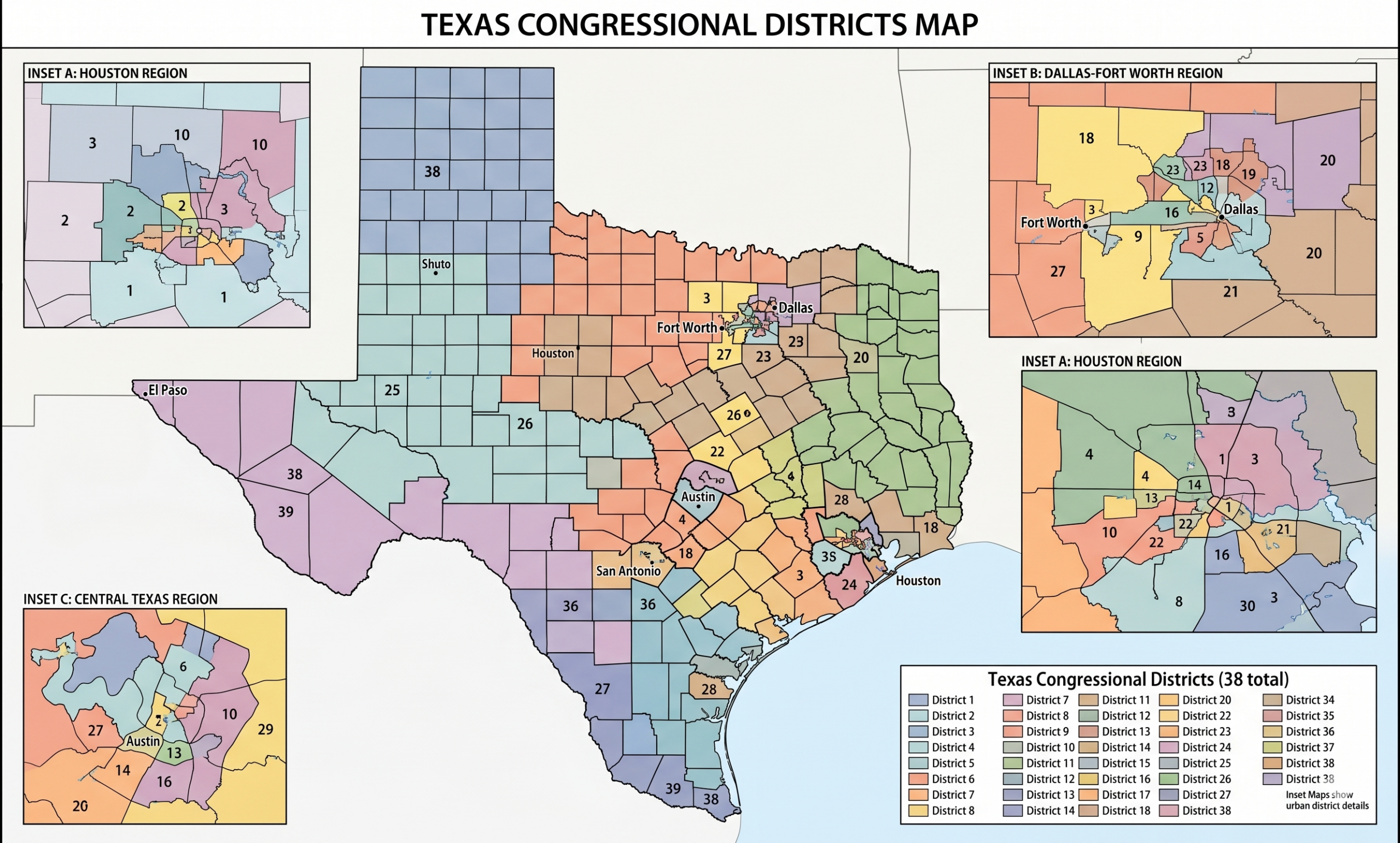
The United States Supreme Court has greenlit the use of Texas’ newly redrawn congressional map by overturning a lower court’s ruling Monday.
Last year, the Court allowed the map to be used on a temporary basis, but Monday’s ruling made this decision permanent, solidifying its use in the upcoming midterm elections and beyond.
In December of 2025, the Justices granted Texas’ request for a stay, finding that the state was likely to succeed on the merits of its case.
Justices Elena Kagan, Sonia Sotomayor, and Ketanji Brown Jackson dissented from the majority at the time, arguing that the temporary ruling “disrespects the work of a District Court that did everything one could ask to carry out its charge — that put aside every consideration except getting the issue before it right.”
When the Court considered a similar request out of California, the decision was unanimous.
[RELATED: Supreme Court Allows California to Use Redrawn Congressional Maps for 2026 Election]
Last year’s divide over the Texas case reemerged Monday, as Justices Kagan, Sotomayor, and Jackson again broke from the majority. No additional comments were included by the Justices regarding their reasoning behind the ruling.
Instead, the Court pointed toward its December ruling as the basis for their decision.
This move formally reversed a lower court’s decision to block the new map on the grounds that it was racially discriminatory, thereby violating the Constitution. Similar allegations were levied against California’s new congressional map.
In both cases, the state governments have argued that their updated boundaries were based solely on politics.
California’s redistricting push came as a response to Texas’ own efforts, as Gov. Gavin Newsom (D) promised at the time to take steps to “nullify what happens in Texas,” calling it a “power grab” by President Donald Trump (R).
Generally speaking, congressional maps are only updated once every ten years in accordance with the latest census results.
With both California’s and Texas’ maps in place for the upcoming 2026 election cycle, their respective impacts on the overall the balance of power in Congress will effectively cancel each other out.



Good. Now SCOTUS has to do the right thing on birthright citizenship.