

Portland, Maine – Graham Platner has built his U.S. Senate campaign around the image of an average Maine working man.
But that carefully crafted message is now facing new scrutiny, as questions surrounding Platner’s background, online history, and campaign finances continue to pile up.
Platner, who has leaned heavily into his identity as an oyster farmer, has presented himself as a working-class outsider running against the political establishment. But critics argue that image leaves out key details: that his oyster farm is more hobby than business, that he comes from a family with wealth and connections, that he has a famous grandfather, that he once backpacked through Europe, and that his father gave him the money to buy his house.
Now, his campaign finances are under the microscope as well.
According to a review of Platner’s Federal Election Commission filings, the Democrat has built a massive national fundraising operation, raising nearly $12 million so far in the 2026 cycle. The campaign’s financial profile shows an overwhelming reliance on out-of-state small-dollar donors, while largely avoiding traditional PAC money.
The filings show Platner has raised $11,956,529.27, spent $9,225,671.66, and has $2,730,857.61 in cash on hand, with no reported debts or loans.
While the numbers are significant, the source and direction of the money raise political questions for a candidate selling himself as a homegrown populist.
Of the $11.8 million Platner has raised from individuals, roughly $7.64 million, about 64 percent, came from unitemized small-dollar donors giving less than $200, with ActBlue serving as the primary conduit.
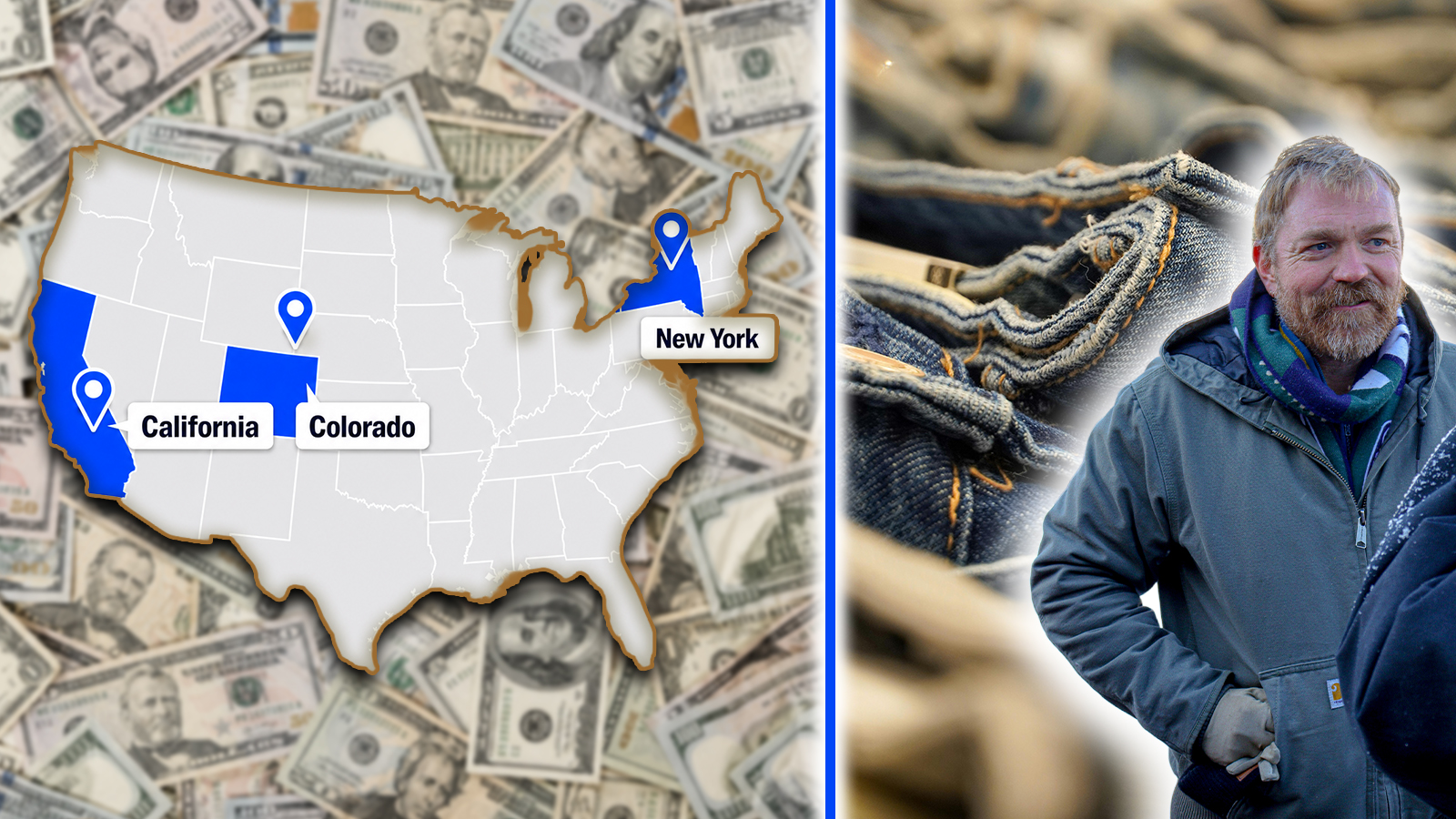
The campaign has also drawn large-dollar support from outside Maine. According to the filing review, Maine residents account for roughly $919,000 of his itemized donations, while donors from California, New York, Massachusetts, Colorado, Washington, D.C., and Florida account for a large share of his national fundraising base.
Platner has raised just $77,550 from PACs, with notable entries including organized labor and Lobo PAC, the leadership PAC associated with Sen. Martin Heinrich. That relatively small PAC figure fits with the campaign’s anti-establishment message, but the broader fundraising picture tells a more complicated story.
Much of the campaign’s spending has gone not into Maine-based infrastructure, but into out-of-state digital and media firms.
The filings show major disbursements to LC Media, LLC in Pennsylvania for media buys, as well as large payments to Helix Campaigns, LLC in Washington, D.C., for digital consulting. Other vendors include ActBlue Technical Services in Massachusetts, North Side Ventures LLC in Massachusetts, and Grit Creative LLC in Pennsylvania.
The review describes the operation as media-heavy and nationally driven, with a limited Maine-based footprint. Maine names do appear in the spending records, including Ben Chin and Katya Fromuth, but the largest payments are directed to firms outside the state.
The campaign’s burn rate also raises questions. Platner raised $3.2 million and spent $1 million in the third quarter of 2025, raised $4.6 million and spent $3.1 million by year-end 2025, then raised $4 million and spent $5 million in the first quarter of 2026.
That means Platner spent roughly $1 million more than he brought in during the first quarter of 2026, a pace that could pressure the campaign if the national small-dollar fundraising machine slows down.
The donor list also includes wealthy national figures from technology, finance, Hollywood, and progressive political circles. Among those identified in the filing review are Facebook co-founder Chris Hughes, real estate developer Joseph Kaempfer, venture capitalist William Janeway, Hollywood agent Bryan Lourd, financier Antonio Weiss, venture capitalist Bradley Tusk, and Saikat Chakrabarti, the former chief of staff to Rep. Alexandria Ocasio-Cortez.
For a campaign built around the message of an ordinary Mainer taking on the establishment, the financial records paint a different picture: a national progressive fundraising machine fueled by out-of-state money, wealthy donors, and major spending through firms far from Maine.
Platner is already facing scrutiny over inexcusable and questionable Reddit posts. Now, his campaign finances are drawing attention as well. Who is the real Graham Platner? A Mainer fighting for you, or a an actor propped up by a political machine wanting to keep its power?
And as the race for U.S. Senate intensifies, one question is likely to follow him: Is Graham Platner really running a grassroots Maine campaign, or part a national political operation wearing dirty jeans and a pair of work boots?




Does anyone else look at Platner and see an uncanny resemblance to Red Skelton’s character ‘Freddy the Freeloader’?
Act Blue is as crooked as they come.
Not to worry .
Common sense will prevail and he will be crushed by Collins .
We hope .
Does he accept AIPAC donations? Democrats love AIPAC money, but they’ll take it from anywhere!
We all know the answers to these questions. The ultra left wing of the Democratic Party is not governed by morals or issues of character, it will eat its own in its hunger to win….see Mills exit and abandonment politically. Platner is an outright fraud. He has exhibited unstable behavior for years, imagine what he would be like in Washington DC surrounded by other leftists? His heroes are Bernie Sanders, Elizabeth Warren, AOC….are these names you associate with lower taxes, growth, and prosperity? No!