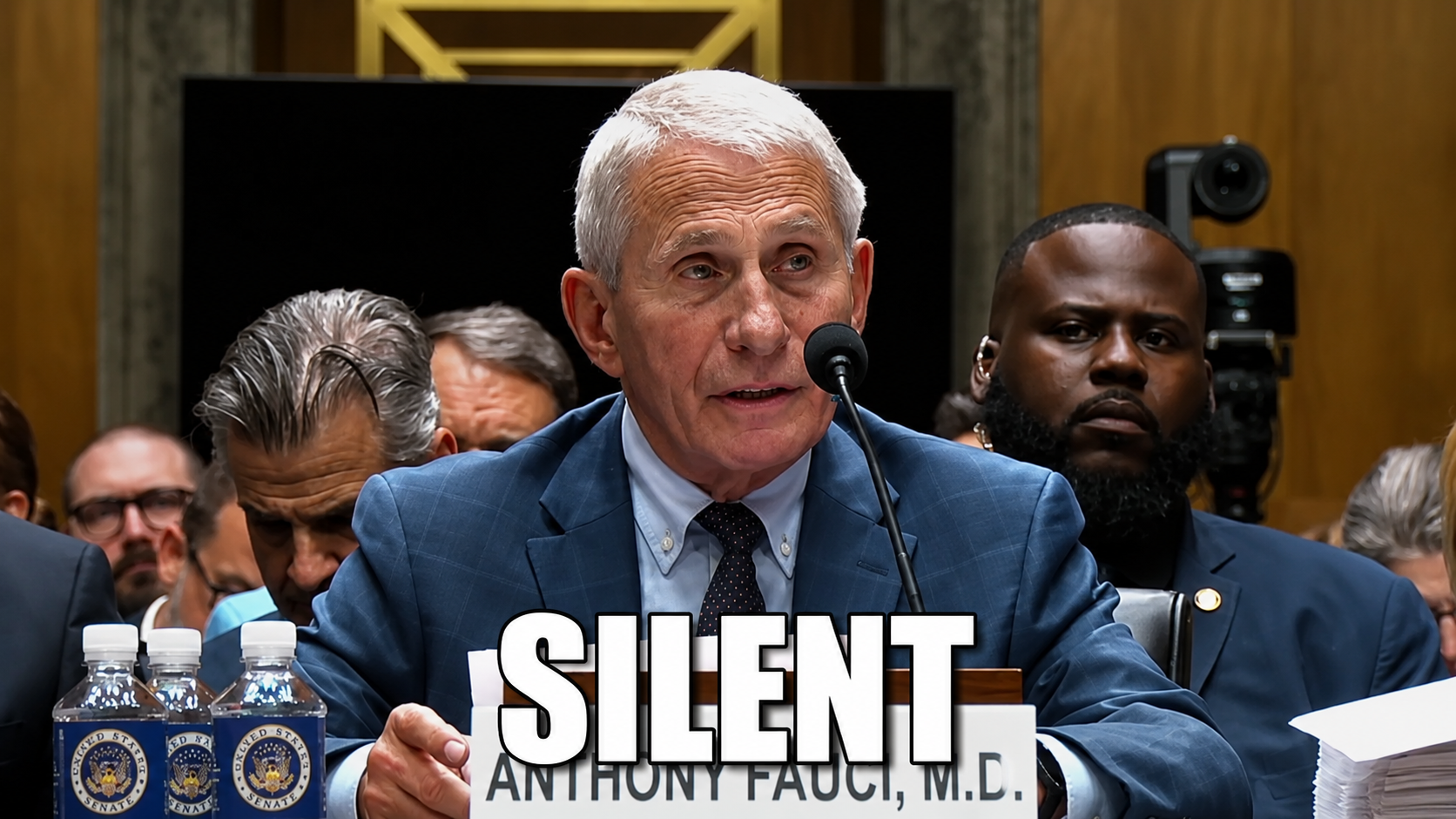
WASHINGTON, D.C. — Dr. Anthony Fauci repeatedly invoked his Fifth Amendment right against self-incrimination Wednesday during a contentious Senate Homeland Security and Governmental Affairs Committee hearing, refusing to answer more than 100 questions about the federal government’s response to the COVID-19 pandemic and the virus’s origins.
The hearing, which lasted roughly three hours, was held under subpoena by committee chairman Sen. Rand Paul (R-Ky.), who has spent years scrutinizing Fauci’s handling of the pandemic and federal funding tied to coronavirus research.
Before questioning began, Fauci explained that he was invoking the Fifth Amendment on the advice of his attorneys, arguing that the hearing was designed to create grounds for criminal prosecution rather than seek factual answers.
Fauci accused Paul of conducting what he described as a long-running public campaign against him and said he believed the hearing was intended to trap him into making statements that could later be used against him.
The repeated refusals quickly became the defining feature of the hearing, with Republicans expressing frustration as Fauci declined to answer virtually every substantive question posed by committee members.
Paul announced that the committee will hold a vote next week, scheduled for Aug. 5 at 10 a.m., on whether to hold Fauci in contempt of Congress.
The Kentucky senator argued that former President Joe Biden’s federal pardon shields Fauci from prosecution for conduct covered by the pardon, eliminating any legitimate basis for invoking the Fifth Amendment on those matters. That legal argument, however, remains disputed and has not been tested in court.
Tensions escalated further when Paul ordered Capitol Police to remove Fauci’s attorney, David Schertler, after Schertler attempted to address the committee without being recognized. Paul ruled the attorney was out of order and directed that he be escorted from the hearing room.
Following his removal, Schertler criticized the chairman’s actions, calling the decision “outrageous” and evidence that the proceeding had become one-sided.
Republican senators used the hearing to revisit longstanding questions surrounding National Institutes of Health funding for coronavirus research connected to Wuhan, China’s laboratory, pandemic mitigation policies, and Fauci’s previous congressional testimony.
Democratic members sharply rejected those accusations, defending Fauci’s decades of public service and characterizing the hearing as a politically motivated effort to target one of the nation’s most recognizable public health officials.
The hearing also unfolded against the backdrop of renewed scrutiny following the recent release of more than 1,100 pages of Fauci’s personal pandemic-era journals by Sen. Paul, documents Republicans argue raise new questions about the government’s internal handling of COVID-19. Fauci has maintained that his public statements throughout the pandemic were consistent with his private records.
Meanwhile, legal scrutiny may continue beyond Washington.
Florida Attorney General James Uthmeier announced Wednesday that his office is opening an independent state investigation into Fauci’s handling of the pandemic. While Biden’s pardon applies to potential federal offenses, it does not extend to possible violations of state law, leaving open the possibility of separate state-level inquiries if applicable.