

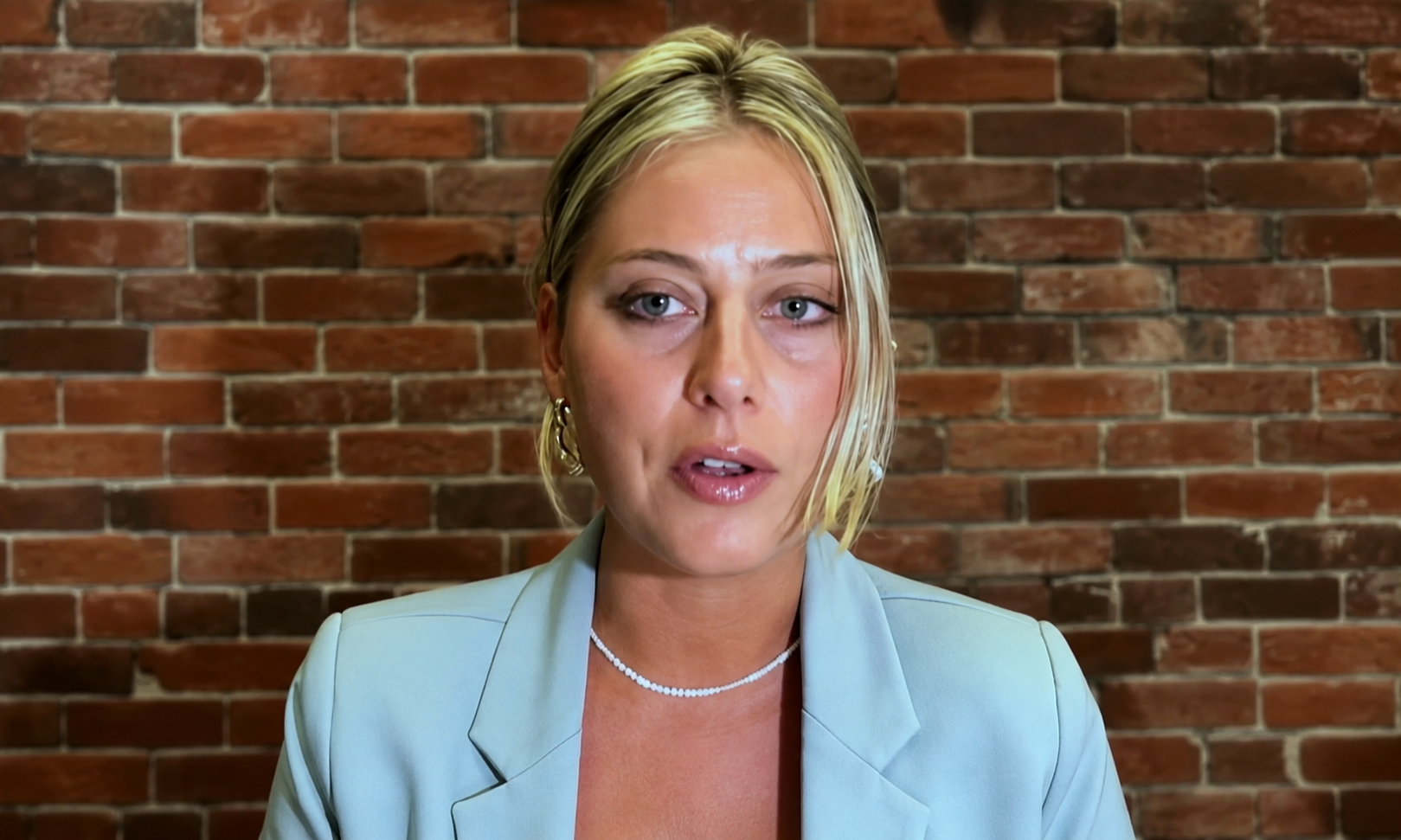
The Maine Democratic Party has released the official rules governing how candidates may seek the party’s nomination for U.S. Senate following Graham Platner’s decision to suspend his campaign, offering the first detailed explanation of a process party leaders have repeatedly described as “transparent.”
The release comes as Democrats race against the clock to replace their nominee before Maine’s statutory ballot deadlines. Although Platner announced earlier this week that he was suspending his campaign following allegations of sexual misconduct and the collapse of support from prominent Democrats, he has not yet filed the official paperwork with the Maine Secretary of State’s Office to formally withdraw from the race. Until that happens, the replacement process cannot officially move forward.
For days, Maine Democratic Party Executive Director Devon Murphy-Anderson repeatedly assured the public that the process would be transparent. Critics, however, noted that the party had released few specifics about how candidates would qualify or how a replacement would ultimately be selected. The newly published three-page Candidate Qualification Rules now provide the clearest picture yet of how the party intends to choose its next nominee.
Eligibility Requirements
Under the new rules, anyone seeking the Democratic nomination must first meet three basic qualifications:
- Be constitutionally eligible to serve as a United States Senator.
- Be a registered voter in Maine.
- Be enrolled in the Maine Democratic Party.
Unlike the June primary, however, the replacement nominee will not be chosen by Maine voters. Instead, the nominee will be selected through an internal Democratic Party nominating convention after candidates complete a multi-step qualification process.
Step One: File a Declaration of Intent
The first hurdle is submitting a written Declaration of Intent by Wednesday, July 15 at 5:00 p.m.
Candidates must electronically submit the declaration to the Maine Democratic Party Chair. The filing requires substantially more than simply announcing a candidacy.
Applicants must provide:
- Their full legal name.
- A current campaign headshot.
- Their voter registration address.
- Campaign contact information.
- A statement of no more than 150 words explaining why they seek the Democratic nomination.
- A second statement, limited to 300 words, outlining how they will continue what the party describes as Maine Democrats’ grassroots movement while ensuring “no Mainer is left behind.”
- A signed affirmation agreeing to comply with all party rules, deadlines, petition requirements and verification procedures.
- Their signature and submission date.
The rules are explicit: late submissions will not be accepted.
Step Two: Build a Statewide Organization
Candidates who file their declaration must then demonstrate statewide support by collecting petition signatures.
By Monday, July 21 at 11:59 p.m., each candidate must submit:
- At least 500 valid signatures from registered Maine Democrats.
- Those signatures must include at least 50 Democrats from each of at least eight different counties.
- Candidates may submit as many as 1,000 signatures, although the party will stop verifying once 500 valid signatures have been confirmed.
Each signer must have been a registered Democrat as of the June 9 Democratic primary.
For every signature, campaigns must collect the voter’s printed name, signature, voter registration address, municipality and ZIP code.
Campaigns must also submit a digital spreadsheet listing every signer in the exact order the names appear on the petition sheets. According to the rules, the spreadsheet is intended to speed verification while demonstrating a campaign’s organizational capabilities.
The Maine Democratic Party also retains sole authority to verify petition signatures and determine whether candidates qualify. The rules specifically state that third-party challenges to another candidate’s signatures will not be accepted.
Candidates may withdraw from consideration at any point before or during the nominating convention by submitting written notice to the party chair.
A Race Against the Calendar
The timeline leaves prospective candidates with only a matter of days to organize statewide petition efforts.
Official petition forms will not even be distributed until after a candidate files a Declaration of Intent, giving campaigns very little time to gather the required signatures before the July 21 deadline.
Meanwhile, the entire process remains contingent on Platner formally withdrawing from the race.
Under Maine law, Democrats cannot certify a replacement nominee until Platner files his official withdrawal paperwork. Once that occurs, the party must complete candidate qualification, verify petitions, hold its nominating convention and certify its nominee to the Secretary of State before the July 27 filing deadline.
Several Democrats have already been mentioned as possible contenders, including former Senate President Troy Jackson, Secretary of State Shenna Bellows, former Maine CDC Director Dr. Nirav Shah, Dan Kleban, Jordan Wood, Paige Loud, David Costello and others.
From 156,084 Voters to an Internal Convention
The newly released rules also underscore just how dramatically the selection process has changed since Maine’s June Democratic primary.
Platner received 156,084 votes in the Democratic primary, the highest vote total of any candidate on the statewide primary ballot. His victory was fueled not only by registered Democrats but also by thousands of Maine’s unenrolled voters, who are permitted under state law to participate in Democratic primaries.
If Platner formally withdraws, however, those same voters will have no role in choosing his replacement.
Instead of returning to voters through another statewide primary, the Democratic nominee will be selected by delegates participating in an internal party convention after candidates satisfy the qualification requirements established by the party.
Supporters of the process note that Maine law authorizes political parties to fill vacancies in this manner and that the compressed election calendar leaves little time for another statewide election.
Critics, however, argue the process raises broader questions about representation. More than 156,000 Mainers cast ballots to nominate Platner, yet his replacement could ultimately be selected by a comparatively small group of party delegates rather than by the voters themselves. Many of the unenrolled voters who participated in the June primary, helping produce Platner’s victory, will have no voice in selecting the new nominee.
That contrast is likely to fuel debate in the coming weeks. The party has repeatedly described the replacement process as transparent and grassroots-driven. Whether voters view replacing the choice of more than 156,000 primary voters with an internal convention as a practical necessity or an example of party insiders exercising outsized influence will almost certainly become part of the political conversation.
For a party whose activists have frequently criticized concentrated political power and championed broader voter participation, the optics of replacing a nominee through a delegate convention rather than a vote of the electorate are likely to invite scrutiny. As Maine Democrats move to fill one of the state’s most important ballot positions, the process itself may become nearly as closely watched as the candidate ultimately chosen.
A few questions…
Will all media and press be welcome? How long is this convention? What is the location? Is it one day or a marathon session? Will ranked choice voting be used. It would be hypocritical, if not , right ? Wouldn’t it be interesting…if Planter changes his mind and does not submit his withdrawal paperwork on Monday 7/13/26 by 5:00 p.m. ?
Bottom line: a mess.




Nothing Democrats do is transparent
dems saving democracy… what a bunch of political hacks.
Will ranked choice voting be utilized in the selection process?
Platner needs to stay in. He’s the only one with the ability to do the slam dunk on Maine. If he loves his State do much why is he letting the pencil necks tell him how to act. Man. Up, all hands on deck, what happen to “semper fi”. What kind of Marine are you???
Dude, this is your moment. Don’t let this unqualified group of rich little democratic yuppie Democrats ruin the movement.
Stay in you’ve got our vote don’t let us down, don’t be known as that guy, “the quitter”.
Now, all the noble lords of the land will gather together to select their next king!
This is wrong!!! To assure that all votes count whether Democrat or Unenrolled (Independent), Janet Mills should be the nominee. Mills was the second place finisher in the June primary, when both Democrats and Unenrolled voted for their choice in candidates.
The Maine Democrats would have saved a lot of time and money if they had properly vetted their candidate. Because the candidate wasn’t properly vetted and turned out to be so flawed, “The Party” turned on him, turned off the money spicket, causing the suspension of the campaign and disenfranchising 156,084 voters.This whole fiasco rests on the shoulders of the Democrat Party and the Democrat Socialists of America.
Don’t Quit Now .
The democrats threw you under the bus . Screw them .
156,000 of us voted for you once and we’ll vote for you again .
Don’t quit …..screw the democrats …they screwed you
I agree with Jeff .
Platner should stay in the race .
F*ck “ The Party “ .
One hundred fifty six thousand Maine voters can’t be THAT wrong .
You OWE IT TO THEM to stay in the race .
Screw “ the party “ …..what did they do for you Bub except toss you out like litter .
I am sure this process will be on the up & up. Right wink, wink
Will this be like scank choice voting? Keep counting until the chosen one wins.
I also wonder what losers they’re gonna pick.
Most importantly who is gonna be counting the votes?
Openness, honesty, and transparency are kryptonite to the jackass party. Anybody who thinks otherwise is an absolute imbecile.
Is that woman as stupid as she looks?
What a f***ing, ridiculous mess… there is nothing democrats do that isn’t corrupt AF
It wasn’t a collapse. The democrats themselves torpedoed platner. I believe I read somewhere that a CNN host coaxed an ex gf to claim rape.
Remember, democrats protested kavanuagh and hegseth for sexual assault.
So Democrats have intentionally disenfranchised about 155,485 voters.
Rules don’t matter to the democrats, they make them up to suit their end game. They will run whoever they want to. The good news is they are horrible at picking law abiding stand up people to do so.
The Maine DNC will be changing its name to the PPP… the Porta-Potty Party.