

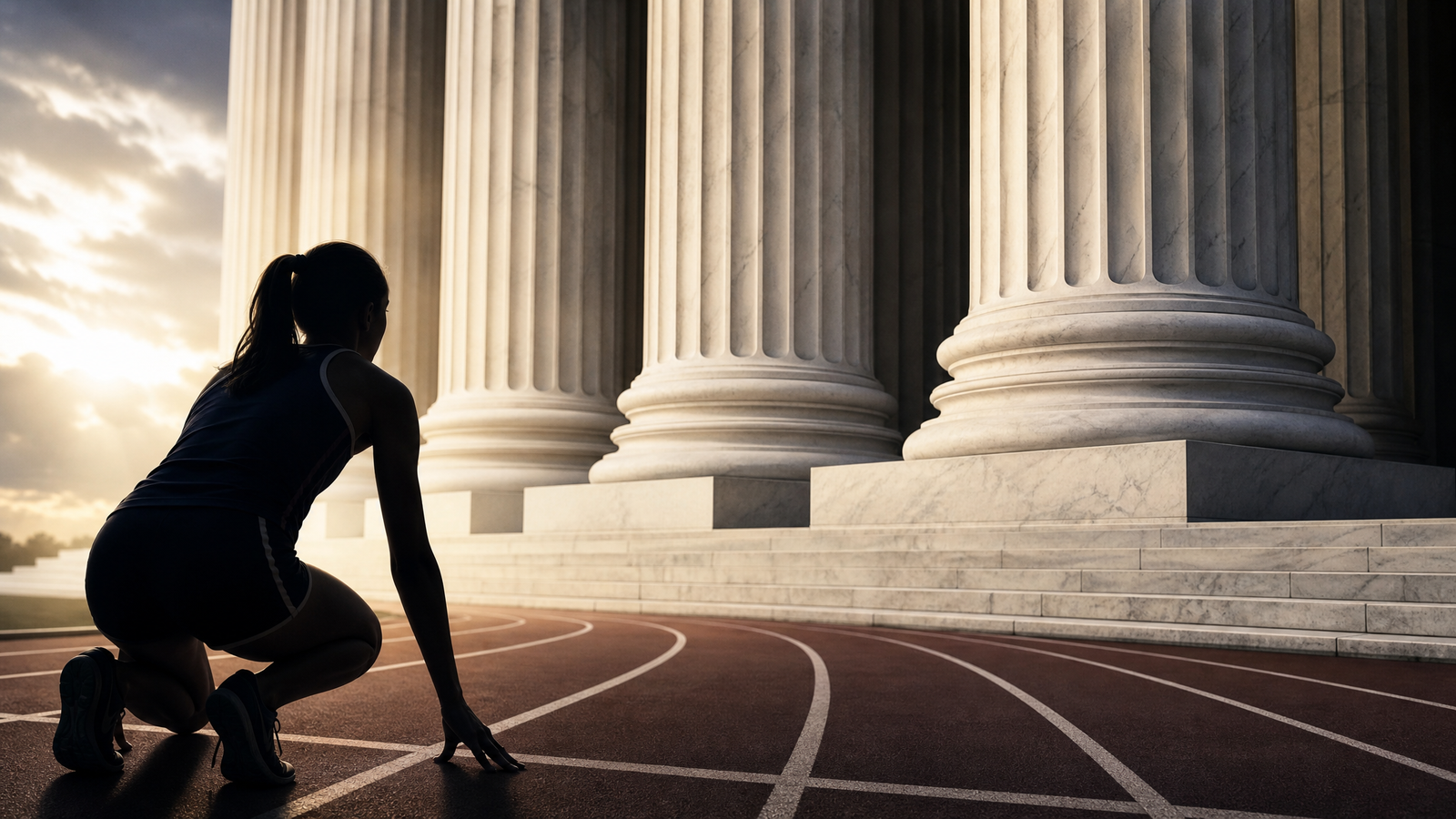
The United States Supreme Court voted 6-3 Tuesday to uphold state laws barring biological males from playing on female-only sports teams.
Justices Sonia Sotomayor, Elena Kagan and Ketanji Brown Jackson concurred in part and dissented in part from the majority’s opinion.
The case brought before the Court stemmed from challenges filed by two students who were barred from playing on female sports teams under state law in West Virginia and Idaho because they are biologically male.
According to Map Research, 25 additional states have similar bans already in place.
In light of this ruling, these laws requiring that eligibility for athletic participation be determined on the basis of biological sex will be allowed to stand, and similar policies may be adopted in more jurisdictions going forward.
States will still have the option, however, of not establishing such a requirement if they so choose.
“The question before the Court is: Under Title IX and the Equal Protection Clause of the
Fourteenth Amendment, may schools maintain women’s and girls’ sports for biological females?” Justice Brett Kavanaugh wrote in the majority opinion. “In other words, may schools determine eligibility for women’s and girls’ sports based on biological sex? The answer is yes.”
“In recent years, some biological males who identify as female have sought to play on women’s or girls’ sports teams,” Justice Kavanaugh said. “That modern development has triggered national and international concerns about safety and competitive fairness for female athletes, as well as related worries about preserving equal opportunity for women and girls to play sports.”
Kavanaugh further noted in the decision that there are “inherent physical differences” between biological males and biological females that make it reasonable for states to have an interest in protecting sex-defined athletics.
“Separate sports teams for biological males and biological females are reasonable: Given the inherent physical differences between the sexes, allowing only biological females to play on women’s and girls’ teams can reduce the risk of physical injury and ensure fair competition,” said Kavanaugh.
“Every biological male who starts takes a starting position from a female athlete. Every biological male who wins a race takes the gold medal away from a female athlete. And so on,” he added.
On behalf of the majority, Kavanaugh closed the opinion by emphasizing that the ruling is not intended to be derogatory towards transgender athletes.
“No student-athlete on either side of the issue, whether a biological female or transgender, deserves to be ostracized or vilified,” he wrote.
Justices Clarence Thomas and Neil Gorsuch each offered concurring opinions in which they expounded upon their own beliefs concerning the questions presented to the Court beyond that which was discussed in the majority opinion.
Justice Sotomayor authored an opinion which represented a partial dissent and a partial concurrence that was co-signed by Justices Kagan and Jackson.
“Because of the Court’s decision today, West Virginia, and any other state actor, can deny [the plaintiff] and others like her these experiences simply because it thinks they have an inherent athletic advantage, even if the facts show that they do not,” Sotomayor wrote. “Sports, of course, are often zero sum, but the law need not and should not be.”
Jackson also authored a partial dissent and a partial concurrence of her own in which she elaborated upon her stance against the construction of Title IX as referring strictly to biological sex.
“Title IX makes room for individuals to live in the gender they choose,” Jackson wrote. “It cares not just about sex assigned at birth but also about individuals’ ability to match (or not) their gender presentation to their gender identity.”
Click Here to Read the Supreme Court’s Full Opinion
Leyland Streiff of Protect Girls Sports in Maine, the ballot question committee behind the citizens initiative seeking to implement a policy similar to that which was at issue in this case, responded to Tuesday’s ruling in a statement obtained by the Maine Wire.
“Today, SCOTUS has confirmed that sex-designated sports are both lawful and inclusive, affirming our referendum’s mission to end the sex-based discrimination happening every day in Maine’s school sports & private spaces,” Streiff said.
“If a female wants a female-only space or sport, she is emphatically owed that by law. Same with males. Anything else is sexist, regressive and illegal,” he said. “And yet shockingly these civil rights are violated every day in Maine’s schools, as females are forced to share their private spaces and playing fields with males.”
On Wednesday, the Maine Supreme Court is scheduled to hear oral arguments in a case concerning the referendum’s eligibility to appear on the ballot this November.
[RELATED: “Protect Girls Sports” Ballot Question Controversy Appealed to Maine Supreme Court]
“Tomorrow, we take our fight to the Supreme Court of Maine, who will hear oral arguments on why the Protect Girls Sports in Maine referendum should remain on the November ballot,” Streiff added. “Mainers deserve to debate this referendum at the ballot box, to once and for all ensure equal protection for all schoolchildren across our state as everyone has a sex, sex is not gender, and there is no right or wrong way to be male or female.”
The ACLU called the Supreme Court’s ruling “heartbreaking” in an interview with CNN.
“This is a heartbreaking ruling for our clients and transgender girls like them who’ve asked for nothing more than the same opportunities afforded to their peers,” said Joshua Block, Senior Counsel with the ACLU.
“She’s been asking to be treated as an individual instead of a broader sex-based group and that’s what the Constitution is supposed to provide her and everyone else the protections of,” he added. “I think in time people are going to see today’s decision as a historic mistake.”


Thank you supreme court. Now, will Mills comply is the real question.
Now……how does Mills throw out the “see you in court”?
Shows the 3 liberal justices still have issues defining a female.
Maine still has its head up its ass when it come to this ruling .
What’s up with the referendum that Bellows has killed ?
Is that Woodson Drummond Clown Show still calling the shots in Augusta ?
As someone who has taught human anatomical dissection to medical students, allied health professional students, and graduate nurses, any self-identified transgender (biological male or biological female) who ends up on a dissection table would be identified by their biological sex. Let that sink in.