

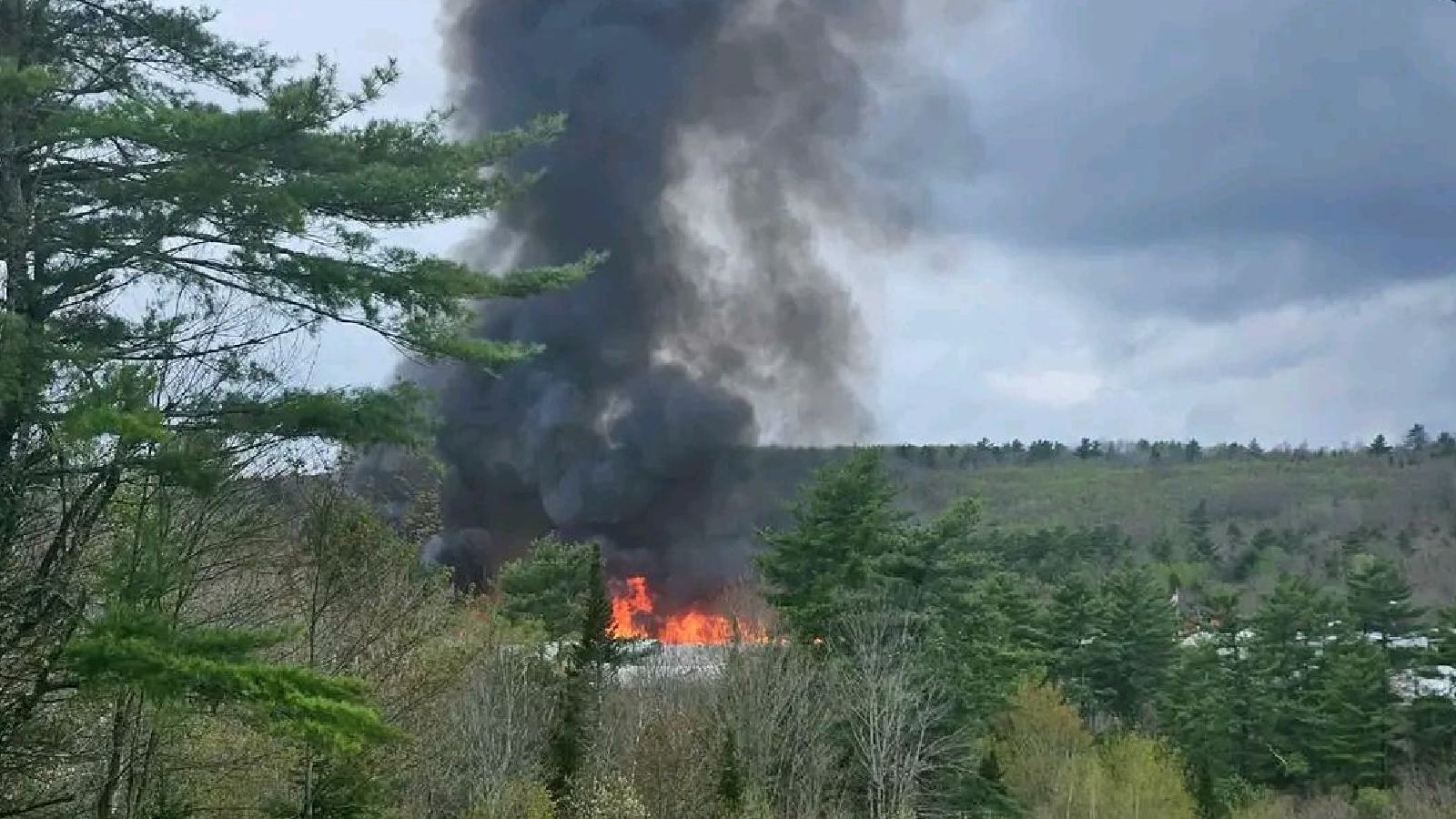
SEARSMONT, Maine — The fire and explosion that devastated the Robbins Lumber mill complex in Searsmont is believed to have been accidental, according to preliminary findings released by the Office of State Fire Marshal.
Investigators with the Fire Marshal’s Office and special agents from the Bureau of Alcohol, Tobacco, Firearms and Explosives National Response Team worked throughout Memorial Day weekend at the scene of the fire and explosion. During the investigation, personnel paused to honor Morrill Firefighter Andrew Cross and remember military members who made the ultimate sacrifice in service to their communities.
The Fire Marshal’s Office and ATF began demobilization operations Monday after completing the initial scene examination. Although the on-scene portion of the investigation has concluded, officials said the investigation remains active and ongoing.
Over the weekend, crane operations were completed to lift and move the silo structure, providing investigators access to critical areas of the scene and allowing evidence recovery efforts to continue.
Based on information obtained so far, investigators believe the fire originated near the unloader mechanism at the base of the silo.
Before fire suppression operations could fully contain the smoldering fire, investigators said a rapid ignition of suspended particulate material caused an explosion inside the silo.
During the explosion, the silo lifted from its concrete base, releasing large amounts of sawdust and additional particulate material. The silo then toppled over, rapidly engulfing the surrounding area in fire.
The flames quickly spread to nearby buildings and structures within the mill complex, contributing to extensive damage across multiple buildings.
Investigators are expected to return to the facility in the coming months to conduct a more detailed examination of the unloader systems. That work may include additional testing in coordination with insurance representatives and technical experts in an effort to further identify a cause.
Investigators also determined that the facility’s fire suppression system, which was located near the top of the silo, did not activate because temperatures at that elevation did not reach the necessary activation threshold after the fire began at the base of the silo.
The investigation is expected to remain open as follow-up analysis, testing, reporting and coordination continue. Freedom of Access Act requests related to the investigation will be directed to the ATF.
The Fire Marshal’s Office will also coordinate with the National Institute for Occupational Safety and Health regarding firefighter safety and has initiated the line-of-duty death review process.
Investigators further clarified that John Ward, who was initially identified as a mill employee, responded to the scene as a member of the Lincolnville Fire Department and was not affiliated with the mill.
Firefighter Cross’s family, his fellow firefighters and the injured individuals continuing their recovery remain in the thoughts of those affected by the tragedy.



I hope Tunnels to Towers Foundation can get an “ official notification” of this sad news .
It’s the reason they get eleven dollars a month from me .
This story is by far the most detailed and current account I’ve read. Kudos to Jon Fetherston and the Maine Wire.