

When Vice President J.D. Vance paid his second visit to Maine, he was there in Brewer to bang the drum for Republican U.S. Senator Susan Collins’ Senate race and ME-CD2 frontrunner Gov. Paul LePage – two household names vying for offices that could well determine whether President Donald Trump has a cooperative GOP Congress for his final two years in office.
Yet for Vance, tapped by President Trump to head the White House Fraud Task Force amid a national reckoning over welfare fraud committed disproportionately by noncitizens and immigrants, one question lingered in the minds of even the most diehard MAGA fans: When will the fraudsters get arrested? When will the thieves get justice?
The question is all the more pressing because of the brazenness of the fraud, with dozens of newly minted MaineCare businesses rapidly rising to tens of millions in annual billing as their CEOs acquire high-end homes and luxury vehicles. While some of these Medicaid moguls have had their funding cut off, dozens more continue to bill taxpayers with impunity, and no one has even hinted that jail time and restitution might be in the picture.
Detailed Medicaid data, released by the Trump Administration in January, tells a story of explosive cost growth in the very programs where fraud allegations are piling up — cost growth that should have been glaringly obvious to any government official tasked with protecting the integrity of public benefit programs.
Home health care spending in Maine went from $42.6M in 2018 to $116M in 2024 — an increase of 175 percent — while the number of Mainers getting “home care” went from 2,488 to 3,192, an increase of just 28 percent. MaineCare has paid out $512.5 million during this period to provide help with daily household activities for fewer than 3,200 people.
Autism group homes also exploded in growth. From 2019 to 2024, according to federal data, 27 new autism group home companies were founded in Maine, at a cost of $473 million. Even more alarming, these MaineCare start-ups are billing at a mathematically improbable rate over the autism care providers that existed in the state prior to 2019.
Federal data shows that Maine had 48 firms billing under the T2016 code for autism residential services in 2018, for an annual total of $250.5 million. That works out to about $12,380 per month per patient. From 2018, as the flood of new group home operators entered the scene, nine of the older providers went out of business. The new group home operators proceeded to out-bill the older companies on a per-client basis by 32-47 percent, depending on the year. While the incumbent providers charged a monthly average of $19,896 per client in 2024, the 27 new firms averaged $28,450 per beneficiary per month. One of the most expensive of the new firms averaged $39,235 per client per month — or $470,820 annually for a single patient.
So when the fraud is mathematically screaming out of the databases, why can’t state or federal investigators stop the fraudsters from looting the treasury in a poor state like Maine?
A source in the District of Maine’s U.S. Attorney’s Office, who requested anonymity to speak openly about challenges facing the Trump Administration’s effort to combat systemic welfare fraud and foreign criminal cartels, said the volume of potential fraud cases and cases related to transnational criminal organizations has far exceeded the small office’s capacity to properly investigate.
Compounding the problem is former U.S. Attorney Darcie McElwee, an ally of Democratic Gov. Janet Mills who was appointed by President Joe Biden, refused to prosecute most drug and welfare fraud cases, meaning President Donald Trump’s U.S. Attorney, Andrew Benson, inherited almost no major fraud cases that were near completion.
“We’re starting from scratch with an understaffed office, a state Attorney General who has prosecuted no new cases of fraud, and a state government that has turned a blind eye to unprecedented levels of welfare fraud and organized crime for eight years,” the source said.
The source said there were at least seven major welfare fraud investigations in the District of Maine that are on hold due to a lack of resources and manpower.
“We could quintuple the number of lawyers and investigators working fraud and racketeering cases and everyone would still be working overtime,” the source said.
Conditions in the U.S. Attorney’s office align with what’s known publicly and what sources have told the Maine Wire about the lack of effort by Maine Attorney General Aaron Frey and the Department of Health and Human Services to investigate and prosecute major Medicaid and Food Stamp fraud cases.
McElwee’s record on Medicaid fraud was anemic, relying primarily on cases that preceded her appointment. Most of the Medicaid fraud cases she handled involved individuals lying about their income to obtain benefits, as opposed to the multi-million dollar provider-side fraud cases now surfacing in places like Minnesota, California, New York, and Maine.
The largest provider case McElwee handled involved a therapist in Corinna who was given three years probation, a $2,500 fine, and ordered to pay $13,087.62 in restitution.
Separate from the situation in the U.S. Attorney’s office, two individuals familiar with the state of Maine’s fraud investigations under the Mills administration told the Maine Wire about a fraud investigation that exemplifies how DHHS and left-wing district attorneys have turned a blind eye to brazen benefits theft. Both individuals spoke on the condition of anonymity out of fear of retaliation by government agencies.
Together, they told the story of how Antoine R. Bikamba, 53, flitted around the small world of left-wing Portland area non-profits, allegedly stole multiple debit cards and EBT cards belonging to clients, was effectively caught red-handed but never prosecuted and instead went on to start an autism company that has billed MaineCare nearly $8 million.
Bikamba, according to both sources as well as other public records, worked for Preble Street as a caseworker, then at Spurwink as a Direct Support Professional (DSP), for the Greater Portland Immigrant Welcome Center board, and then for Shalom House.
During his time working for Shalom House, the sources said, Bikamba was subcontracting for the Portland Housing Authority (PHA). During this time, his contract was terminated after he was accused of stealing and using a clients debit card and multiple EBT cards.
“He stole a Portland Housing Authority client’s debit card and made unauthorized transactions with that client’s debit card at an ATM,” one source said. “Portland Housing Authority told that client that they needed to file a police report… You’re telling me that you’re telling a client to go file a police report when they have freaking case managers? Because they are an individual that is not capable of taking care of themselves.”
The theft was never reported to the Portland Police Department.
A subsequent investigation into the use of an EBT card by an individual who had died led once again to Bikamba.
“Lo and behold, someone was also calling into the department, pretending to be the client at least 10 times after they had passed to follow up on their SNAP benefits, and when we did a reverse search on the phone number that was calling, it came back to Antoine Bikamba’s phone number,” the source said.
Further investigation found that Bikamba had attempted to call Maine DHHS regarding the EBT card benefits of multiple other individuals, the sources said.
That included the EBT card of an individual who was found wandering the streets of Portland in July of 2020 in a state of apparent dementia. The individual, a non-English speaking illegal alien from an unknown African country, was hospitalized at taxpayer expense for more than a year.
Eventually, Maine’s Office of Aging and Disability Services (OADS) took custody of that individual, whose medical condition required 24/7 intensive long-term care, and secured a no-bid contract worth more than $800,000 to put them in a long-term care facility in Oakland. That no-bid contract was the subject of a previous Maine Wire report last year.
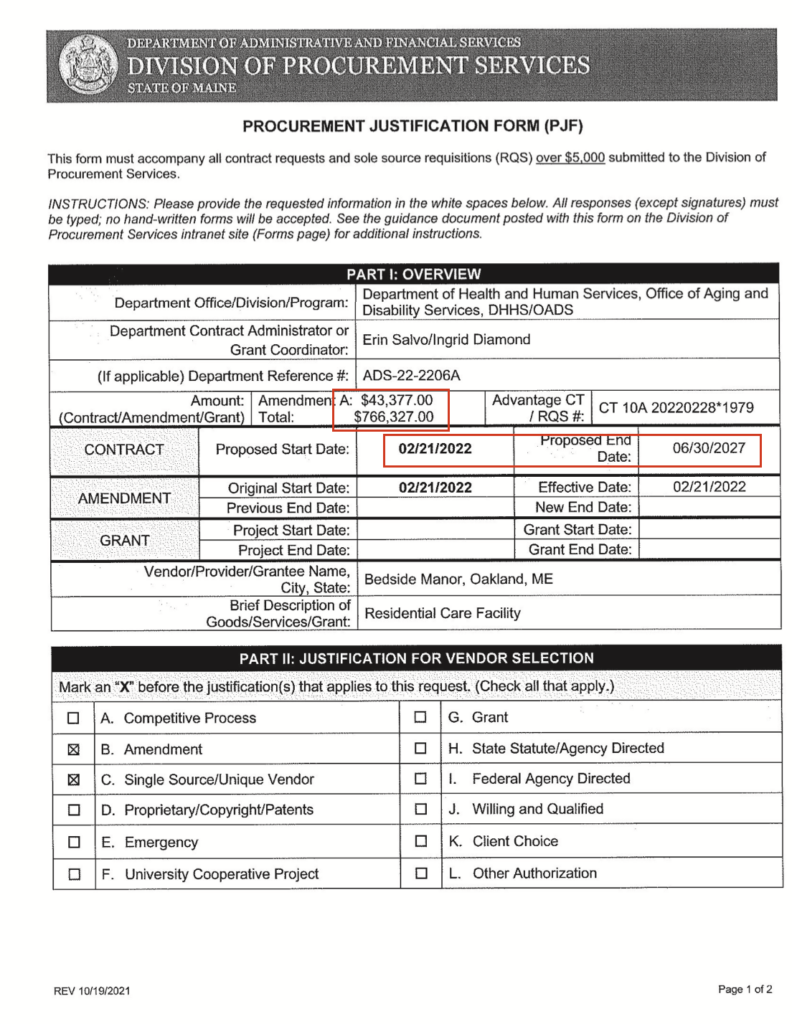
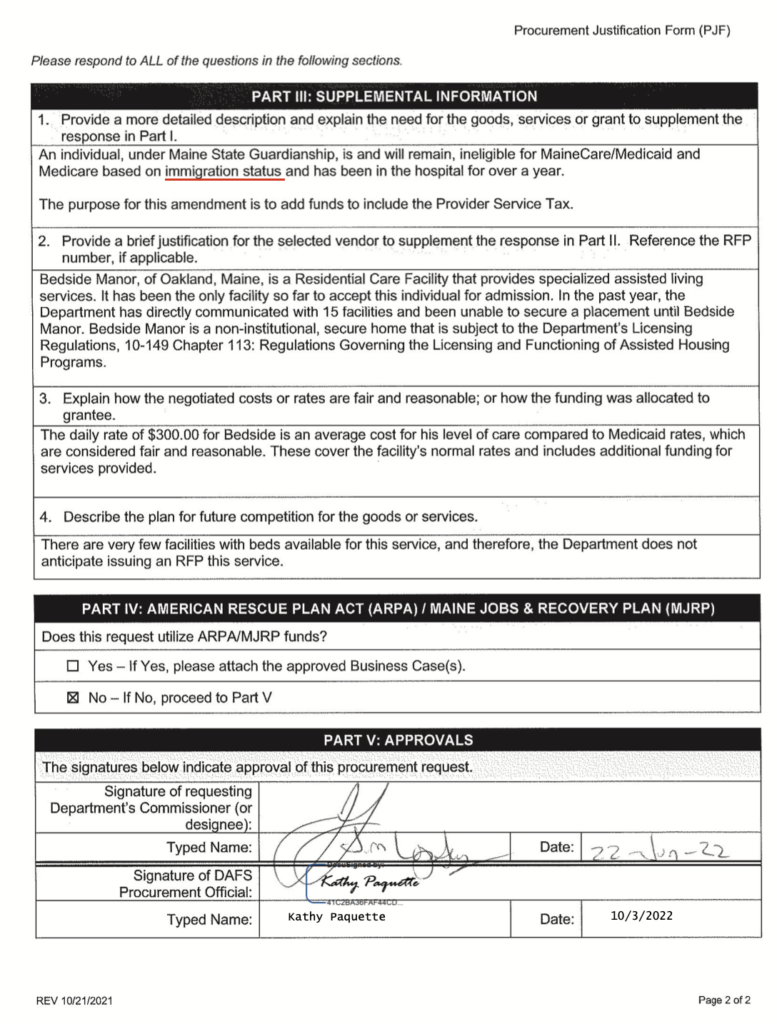
According to the sources, the entire investigation into Bikamba’s alleged welfare fraud and identity theft were given to Cumberland County District Attorney Jackie Sartoris, a far left progressive who won office in 2022 thanks to $385,000 in campaign spending from George Soros-affiliated political groups.
“It was gift wrapped and packaged off to Jackie Sartoris’s office, and the last we were aware, it was still sitting there,” the source said.
Sartoris’s office refused to respond to multiple inquiries about the status of Bikamba’s case.
Bikamba, in a phone interview, said he was unaware of any case involving him and denied ever having used another person’s EBT card benefits.
Multiple inquiries to the Maine DHHS regarding Bikamba went unanswered.
Pastor Tony Moves from EBT Cards to Autism Group Homes
Bikamba, a self-described Rwandan migrant who sometimes goes by Pastor Tony, arrived in Maine in 2008. didn’t have to scrounge for EBT cards for long. While the prosecution referral was collecting dust on Sartoris’s desk, Bikamba was busy forming Green Leaf Residential Care, LLC, a multi-million-dollar MaineCare provider that operates autism group homes throughout Maine.
From 2022 to 2025, Bikamba collected $6.8 million in MaineCare payments, according to records obtained under the Freedom of Access Act.
In a phone interview, Bikamba acknowledged running the autism group homes, but he denied that he ever brought any disabled migrants to the state and denied ever improperly using another individual’s EBT card.
“I’m not aware of that,” he said.
Although Bikamba began billing MaineCare in 2022, state records show that his company was not licensed to provide residential care until Oct. 2025. State records show that Green Leaf operates group homes on Garland Road and Cardinal Way in Bangor, Hotel Road in Auburn, Holyoke Street in Brewer, and Hallowell Road in Durham. The same records show that Green Leaf underwent what DHHS refers to as a “desk review,” wherein a government employee inspects the company over the telephone, and was found to have no deficiencies.
If Bikamba’s wheels are any indication, business is booming.
Public records show he owns a 2016 Mercedes GLC and a 2021 Mercedes GLE. Prior to that, he owned a BMW X5, an Audi Q7, and an Audi Q5. But before he tapped into the MaineCare cash flow, Bikamba relied on more humble wheels – a 2008 Nissan Rogue that he purchased in 2012 with Jocelyne Ininhazwe, the former CEO of the now-defunct Paradise Residential Services, an autism group home company that bills the same exact program as Green Leaf Residential.
While Green Leaf remains in business, Paradise’s operations were terminated on an emergency basis earlier this year after state inspectors found serious deficiencies that threatened the health and well-being of their clients.
From 2022 to 2026, Paradise managed to bill nearly $25 million.
Like Bikamba, Ininahazwe is an immigrant from Central Africa and, like Bikamba, she’s a fan of German luxury vehicles, with both her and her son owning a Mercedes E-Series and a Mercedes G-Wagon.
In the phone interview, Bikamba said he and Ininahazwe are just friends, and he declined to comment on the remarkable coincidence that both of them struck it rich in Maine’s autism group home industry.
Green Leaf Residential Care and Paradise Residential Services are just two examples of “New Mainers” running start-up MaineCare businesses that exploded in cost under the Mills administration with next to no scrutiny from regulators until the Trump administration and CMS Administrator Oz began bearing down on the state.
In response to an April Freedom of Access Act request for records related to Ininahazwe, Bikamba, and several of their associates in the autism group home industry, DHHS asked the Maine Wire to pay more than $40,000 for records that would take more than one year to deliver.
“Given the scope of your request, the Department’s initial, good faith, non-binding estimate to retrieve, compile, and review the responsive records that are subject to FOAA will be $41,085.50 for 1,645.42 hours of work in which the estimated time to be completed in 411 days from the time a check is received,” the agency said.
Maine’s Fraud Squad AWOL
Although the Maine DHHS claims that it refers cases of suspected fraud to the Attorney General’s office, there’s little evidence that Attorney General Aaron Frey treats the theft of millions of taxpayer dollars — or the abuse and neglect of disabled Mainers — with the same seriousness and alacrity that he does amicus briefs for transvestites in West Virginia or symbolic lawsuits against Exxon-Mobil.
Frey, a former Democratic lawmaker, was tapped by Democratic lawmakers to serve as AG in 2018. Since that time, his office has assisted with just three cases of Medicaid fraud — and all of them related to the same federal conspiracy case that was investigated and built two years before he came into office.
That case, which resulted in guilty pleas from Abdirashid Ahmed, Garat Osman, and Nancy Ludwig, was spearheaded by the FBI and the Department of Homeland Security beginning in 2016, when both President Donald Trump and Gov. Paul LePage were in office.
In a March letter to Centers for Medicare and Medicaid Administrator Dr. Mehmet Oz, the Mills Administration said that Maine DHHS made four criminal referrals to the AG’s office in 2021 — all of which were declined. From 2022 to 2025, DHHS referred 18 cases for criminal prosecution but, as of Feb. 2026, only one resulted in a guilty plea.
Apart from cases that began before he took the job, there’s no public record of Frey pursuing a single welfare or MaineCare provider fraud case — even as total spending and fraudulent spending ballooned on his watch.
In the high-profile instance of Gateway Community Services, a migrant services agency that has been credibly accused of defrauding the state as it billed roughly $5 million per year the entire time Frey was in office, the Attorney General actually awarded Gateway a $400,000 opioid grant after whistleblower allegations were published by The Maine Wire and replayed throughout national media.
To date, Frey has announced no charges against anyone involved in Gateway’s alleged fraud scheme, and Somali-American founder Abdullahi Ali has absconded to Kenya.
Although Mills initially brushed off Centers for Medicare and Medicaid Administrator Dr. Mehmet Oz’s critical audits of Maine’s Medicaid mismanagement as political attacks, behind the scenes she and her allies were scrambling to create some semblance of fraud enforcement.
In August, following Administrator Oz’s interview with The Maine Wire, DHHS issued a press release touting its enforcement actions, the majority of which involved canceling the provider agreements of businesses that never billed MaineCare in the first place.
Of the providers suspended by Mills and her DHHS Commissioner Sara Gagne-Holmes, only seven were actively billing MaineCare and account for more than $138 million in taxpayer spending, according to state and federal payment records.
Records released by the Mills administration revealed that, on the same day Mills blasted Oz as a “TV doctor,” her administration issued the termination letters to Paradise Residential Services and Beyond Residential Care.
Felix R. Hagenimana, the founder of Beyond Residential Care, has also been accused by the Maine State Bar Association of using ChatGPT to file bogus asylum claims for nearly 1,500 central African illegal aliens – the same population from which most of the African-owned autism firms draw their non-English-speaking employees. Hagenimana, himself a Rwandan migrant, has denied the allegations in the Maine Bar complaint.
[RELATED: Rwandan Immigration Lawyer Faces Bar Complaint After $13M Autism MaineCare Biz Axed…]
The same release touted by the Mills administration also include Gateway, which was suspended almost a year ago.
In all seven of the cases the Mills administration as pointed to as evidence of their tough stance on fraud, there have been no arrests, no orders of restitution, and no indications that taxpayers will ever be repaid.
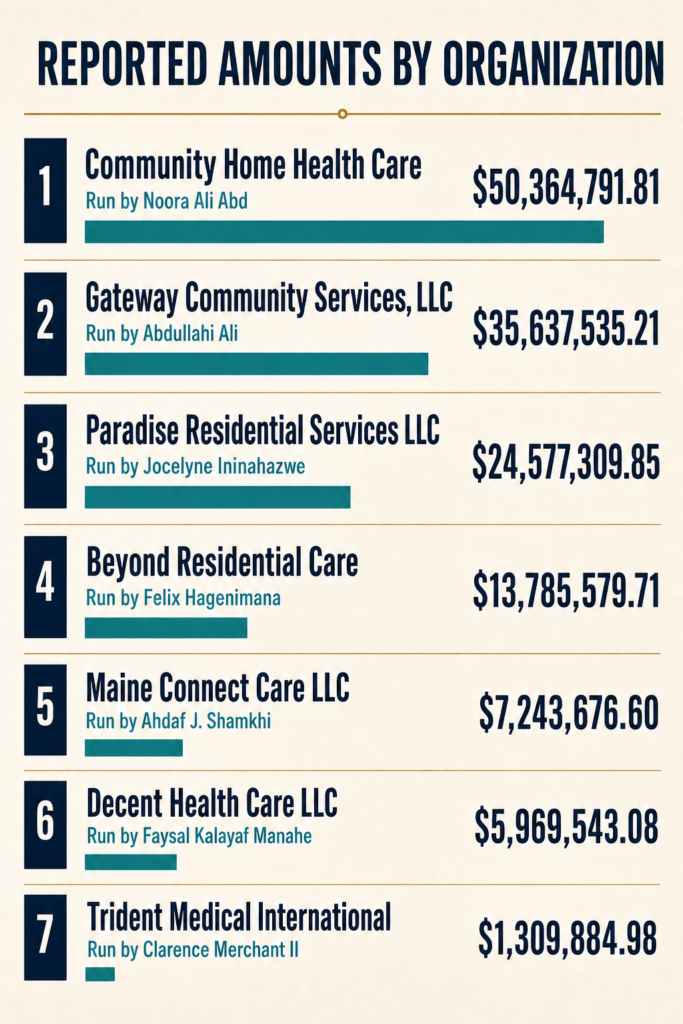
Beyond the financial fraud, state investigators described harrowing conditions of neglect, abuse, and rights violations at the group homes controlled by the two companies.
In a termination letter obtained under a Freedom of Access Act request, state officials said the two autism residential care providers were found violating the disability rights of autistic Mainers and putting their lives in immediate jeopardy, with homes described as filthy, dangerous, and understaffed.
In light of the U.S. Attorney of Maine’s apparent lack of resources to confront widespread fraud within the home health care sector, but also the residential autism care industry, it’s worth asking how many other lives are currently in jeopardy because the state hasn’t effectively ensured that multi-million dollar Medicaid businesses are protecting Maine’s disabled population.
In a comment to the Maine Wire, Oz reiterated his commitment to snuffing out fraud in the Pine Tree State.
“Fraud doesn’t just waste taxpayer dollars — it erodes trust in the programs millions of Americans rely on,” said Oz.
“When credible instances of fraud emerge, taxpayers and beneficiaries deserve to see swift action,” he said. “We need all stakeholders including state leaders in Maine to move with urgency and work aggressively with federal partners to root out fraud, protect taxpayer dollars, and ensure Medicaid is there for the people it was meant to serve.”